
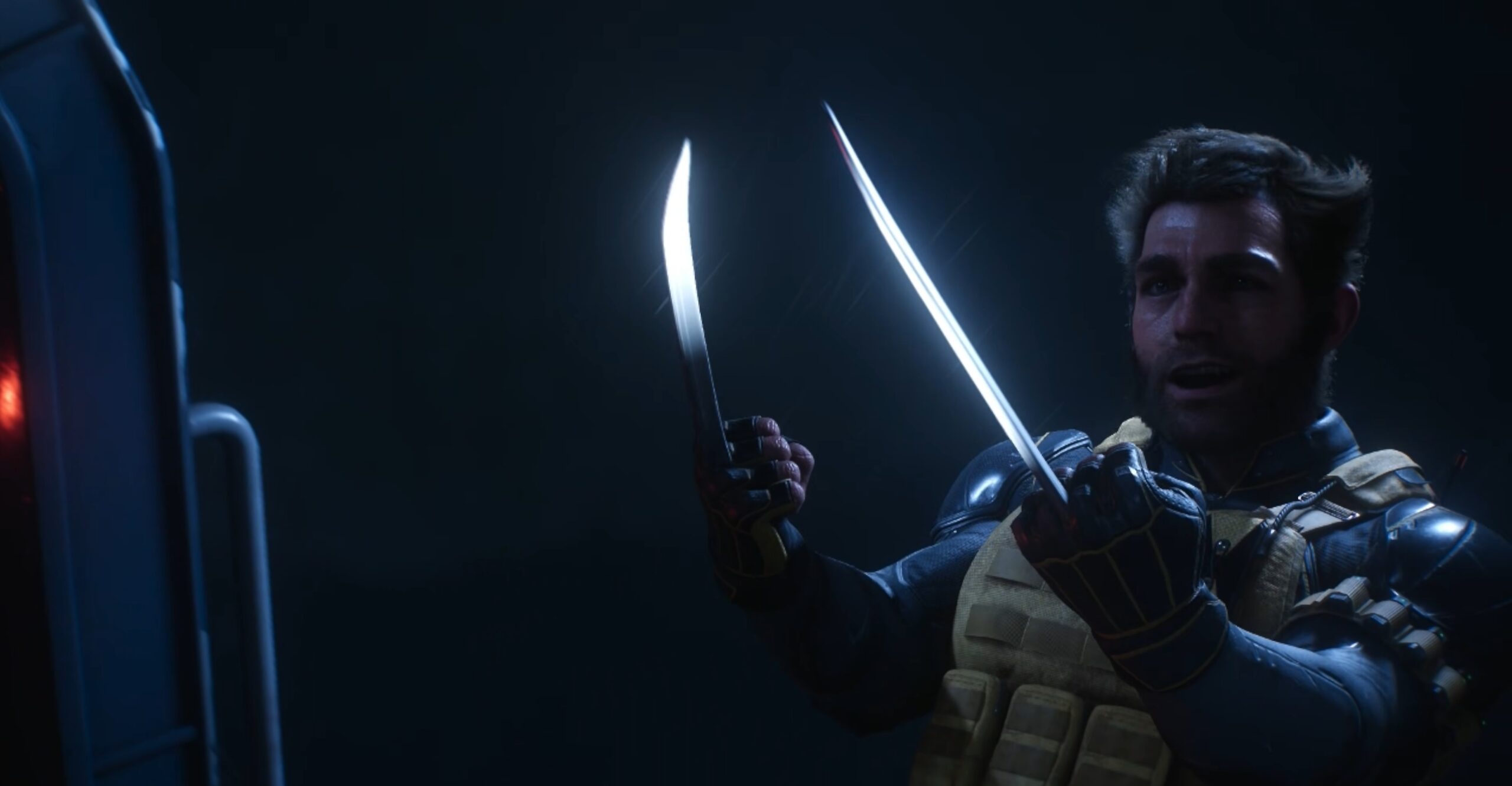
Wolverine’s shallow combat becomes repetitive, but its short campaign contains that weakness surprisingly well. Strong momentum and a convincing Logan fantasy make this a better action game than the hostile reaction suggests.
A GOOD GAME BEING JUDGED LIKE A FAILURE
For some reason, Wolverine is getting judged like an abject failure. It is not groundbreaking. Its combat gets repetitive, and the $70 value proposition is questionable for anyone measuring value heavily by hours. None of that makes the game itself mediocre.
The reaction feels much harsher than the product warrants. This is a solid action game being discussed like Sony shit the bed.
The important question is whether a shallow combat system makes the whole game bad. Here, the answer depends heavily on how long the game asks that system to carry the experience.
THE COMBAT FEELS BETTER THAN IT ACTUALLY IS
Wolverine nails the immediate fantasy. You dismember enemies, the animation work is good, Logan is mobile, and constant passive regeneration encourages forward pressure. Rage builds organically through combat and fades outside it instead of becoming another super meter you hoard for the perfect moment.
Normal enemies die quickly enough for the visceral feedback to carry the system. As you improve, cutting through groups becomes increasingly satisfying. That is why the underlying shallowness stays hidden so effectively at first.
Around two-thirds of the way through, the bigger brute enemies expose it. Their large health pools extend fights without introducing sufficiently different decisions. You use familiar cooldowns, parry or dodge, counterattack, and repeat.
Early brutes are weak enough that the repetition matters less. The stronger Act II and III variants make it glaring. I started rolling my eyes whenever several appeared in a room. They did not feel more challenging; they made the game feel slower.
This system is not built for extended fights against high-health enemies. Once the spectacle has to sustain that kind of encounter, its limited decision-making becomes impossible to miss.
UPGRADES IMPROVE THE KIT MORE THAN THEY TRANSFORM IT
The upgrades initially suggest meaningful buildcraft. Perfect-dodge ranged counters, melee counters that build stagger, easier parries, and similar techniques are useful, but they rarely change your approach. They mostly make you better at what you already do.
Even the ability selection is narrow: six abilities for four slots, with the final two arriving late. Choosing your four is the most interesting decision, but the abilities largely remain tools for killing enemies efficiently rather than creating distinct playstyles.
The apparent depth of the unlockable techniques and adaptations resolves quickly by Act II.
Bosses do not fix this. Their limited movesets become familiar after a few repetitions, and their health pools emphasize parrying for stagger windows and chaining cooldowns. They test execution and endurance more than they present novel combat problems.
As spectacle and narrative events, the fights are excellent. Mechanically, they lack the escalation the late game needs.
THE EIGHT-HOUR CAMPAIGN SAVES THE COMBAT
I finished Wolverine in about eight hours on the normal, developer-recommended difficulty. Combat started wearing thin around hour five or six. The game ended shortly after the repetition really set in.
Within that actual runtime, the system is approximately as deep as it needs to be. That does not mean it is secretly deep. It means the campaign contains its limitations.
Stretch the same design to 15 or 20 hours and the repetitive combat becomes a crippling weakness. Instead, Wolverine shows more discipline than many modern AAA games. It knows when to end.
That discipline does not automatically make it good value. At $70, an eight-hour campaign is hard to recommend to someone who strongly values hours per dollar. New Game Plus, harder difficulties, collectibles, and unlocks offer replayability, but how much longer do you want to spend in this combat system?
For the value-conscious player, I would be more comfortable recommending it around $40. Adding ten hours of filler would not solve the pricing problem. It would make the game worse.
THE AUTOMATED QTES ARE BIZARRE
The quick-time events are a baffling choice. The game is already easy and heavily guided, yet these sequences can complete themselves. Even the motorcycle segments play themselves if you let them.
Participate normally and you might never notice. Stop roleplaying the design document and the illusion breaks immediately.
These fake interactions accomplish little beyond making the game look worse than it is. They do not ruin the surrounding action, where you are still actively playing, but their inclusion is unnecessary.
SOME GUIDANCE SERVES THE PACING; SOME GOES TOO FAR
The scent trail fits Wolverine thematically. Obvious collectibles also help keep the campaign focused. Constant hint markers and ability reminders go too far, adding guidance to a game whose pacing is already fast.
There is little exploration, but I do not consider that inherently bad. Large open areas full of collectibles and repeatable missions would give the shallow combat more time to become exhausting.
One of the game’s strengths is how rarely it gets bogged down. Preserving that momentum matters more than adding an open world just because other games have one.
WOLVERINE ACTUALLY FEELS LIKE WOLVERINE
The complaints about Logan’s characterization do not match my experience. The premise is that he has lost his memories, but he remains guarded, jaded, violent, and extremely competent.
The mechanics support that characterization. You regenerate, lunge into enemies, dismember them, and maintain constant aggression and rage. It never felt like Insomniac simply reskinned Spider-Man.
Crucially, you spend the campaign playing as Wolverine. There are no Mary Jane bullshit segments interrupting the central fantasy.
THE SPIDER-MAN 2 COMPARISON CUTS BOTH WAYS
Spider-Man 2 was critically praised despite many similar limitations: repetitive combat, upgrades that refine rather than transform the kit, and heavy guidance.
It spreads those problems across a longer, more bloated campaign with more filler, interruptions, and segments disconnected from the central fantasy. I also found its story less focused, interesting, and emotionally resonant than Wolverine’s.
Wolverine inherits some familiar Insomniac weaknesses, but contains them more successfully. As a complete package, it has fewer things actively dragging it down.
THE STORY UNDERSTANDS MOMENTUM
The stakes continually escalate, the central antagonist has strong buildup, and the character development generally lands.
The main pacing stumble is the Act I intermission leading into early Act II. An exploration- and dialogue-heavy stretch noticeably slows the game. It reinforced my suspicion that substantially expanding the exploration would damage the experience.
By the middle of Act II, the momentum returns. The campaign then ends where it needs to. Another five hours would feel unnecessary both narratively and mechanically.
THE DISCOURSE IS HARSHER THAN THE GAME DESERVES
My read of the reaction is that a merely very good first-party flagship has become a lightning rod for broader frustrations with Sony’s output. That is an interpretation of the discourse, not something I can prove about every critic.
I do not think those larger frustrations should determine the assessment of this particular game. If a smaller publisher or Xbox released this exact product, I suspect it would be treated more often as the solid action game it is.
It is no masterpiece. Calling it mediocre slop still does not describe the experience I had.
VERDICT
Shallow combat, repetitive enemies, automated QTEs, and excessive guidance are real weaknesses. The $70 price also makes the recommendation harder for value-conscious players.
But Wolverine executes its central fantasy extremely well, feels great moment to moment, maintains strong narrative momentum, avoids pointless bloat, and stops before its limited systems collapse under their own weight.
Not every good game needs to reinvent the medium. This is a good action game whose strongest design decision may be knowing exactly how long it should last.
8/10
Reviewed by VG Frogman
Platform: PlayStation 5 Pro
Publication date: 10/10/2026