
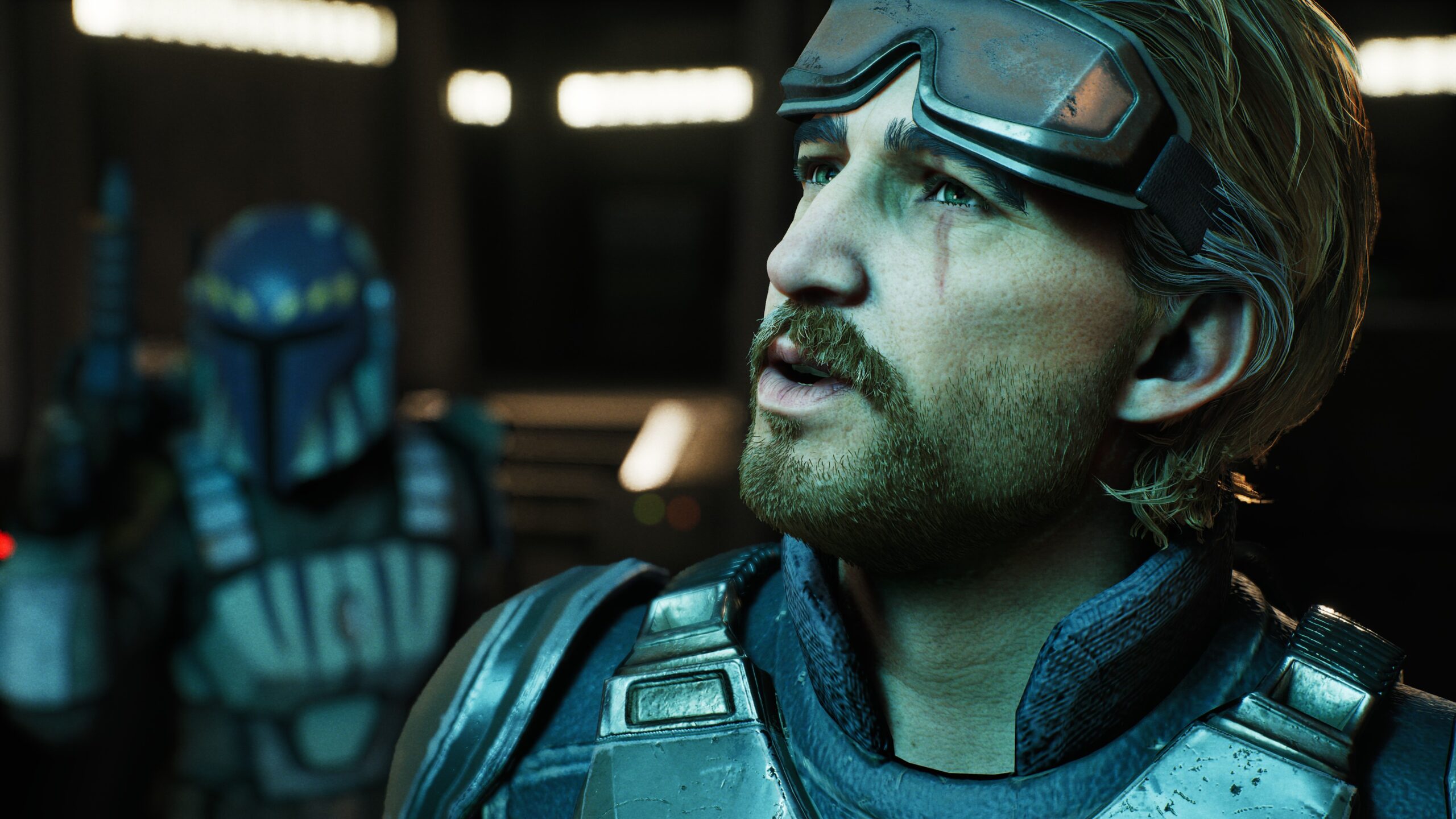
Zero Company combines excellent tactical combat with authored characters worth caring about. Its forgiving wound system supports that design, while severe performance problems repeatedly interrupt the decisions that make it work.
Spoiler note: This review discusses some companion quest outcomes and the injury system. Skip to the spoiler-free verdict.
MORE THAN STAR WARS XCOM
As a longtime Star Wars fan, I had become demoralized by much of the output since the sequel trilogy. There were bright spots, but too few to keep me invested. Star Wars: Zero Company proved that the franchise’s demise was exaggerated.
It combines excellent tactical combat with a genuinely likable cast while doing something refreshing with the genre. This is much more than XCOM wearing a Star Wars skin.
Unfortunately, ridiculous performance problems make the combat feel more tedious than it actually is. Fix those interruptions and the game belongs in my personal game-of-the-year conversation.
THE TACTICS ARE FANTASTIC
The tactical combat is exceptional. It is much less punishing than XCOM, but that does not make it worse.
The early game gives you room to learn. Later story and side missions apply more pressure without regularly becoming overwhelming or frustrating. Annoying enemy abilities exist, but your squad also has tools to counter them.
Success feels like understanding the team you built and using its systems intelligently rather than surviving bullshit RNG.
The game pursues different stakes and a different emotional experience from XCOM. Its challenge curve makes sense for those goals.
BUILDCRAFT MAKES THE SQUAD YOURS
Major characters can develop substantially, and even generic recruits remain present at the base, talk to you, and have useful builds. They are not simply disposable inferior units.
You can freely respec the crew between missions. That is an excellent choice for a game with substantial class and subclass interactions.
Experimenting with combinations, responding to specific enemy compositions, and discovering synergies are part of the fun. Some of my favorite combinations were character-specific, and I would rather leave those discoveries to you.
The central question becomes “What can these characters do together?” instead of merely “Who has the highest numbers?”
XCOM’S BRUTALITY WOULD UNDERMINE THIS GAME
XCOM begins with largely interchangeable soldiers. Their stories emerge from missions: a remarkable shot, a disastrous mistake, a heroic rescue, an unexpected death. Permadeath helps those events create attachment.
Zero Company begins with authored characters. They have personalities, histories, relationships, side quests, and ongoing arcs. The emergent battlefield moments build on characterization rather than supplying all of it.
Take Trick, the discharged clone trooper. Losing him three missions in means losing someone whose meaning has barely developed. Losing him much later carries the history you have learned, his conflicts with the crew, his quests, the build you developed, and the battlefield moments accumulated along the way.
A forgiving wound system gives that attachment time to form. Characters are incapacitated rather than immediately killed, and three wounds are required before permanent death. Reviving is relatively easy and healing after missions is cheap.
I did not permanently lose anyone beyond the early scripted loss used to introduce the system. That is not automatically a flaw. The danger serves this game’s character-driven goals.
Copying XCOM’s punishment more closely would risk making the narrative systems work less effectively.
THE CREW CARRIES THE GAME
The central plot is fairly bland, and the main villain is not especially compelling or memorable. The crew does the heavy lifting.
I kept my created protagonist close to the default Tesh Hawks. He is straightforwardly heroic, and that works. Being good does not make a protagonist shallow. Hawks has charm and enough depth without endlessly questioning whether helping people is naive.
He also anchors an otherwise dysfunctional collection of outcasts when things get rough.
Trick’s history as a clone soldier creates meaningful conflict with Separatist-sympathizing crewmates. Through those relationships, the transition from the Clone Wars toward the Empire becomes a story about former enemies reluctantly working together.
Jae, a disgraced heiress to an ore barony, hires the group to help reclaim her position. When you succeed, she leaves to become baroness. The game does not invent a contrived excuse to keep her in the squad.
Her departure has tactical consequences. A narrative resolution changes your available team, and you have to deal with the resulting gap. That is meaningful integration between the story and gameplay.
Other characters have strong arcs, tasteful fan service, and emotional moments that feel more like a character-focused RPG than a conventional tactics game.
AUTHORED ATTACHMENT STRENGTHENS EMERGENT STORIES
XCOM makes Private Assblaster memorable through what he does or fails to do in missions. Zero Company makes you care about a person, then lets the battlefield add to that relationship.
A clutch revive matters more because Trick performed it. Jae barely surviving matters more because you know her beyond the combat grid. Builds become expressive because you are developing characters as well as optimizing numbers.
The game understands that soldiers are more than statistics without forgetting that tactical decisions depend on statistics.
THE WRITING LETS SERIOUS MOMENTS BE SERIOUS
Emotional scenes are allowed to land. Characters respond to serious events with appropriate seriousness instead of punctuating everything with an aloof joke.
If someone tells you a family member died and you respond with a clever quip, you are a fucking prick. That tonal habit is mercifully absent here.
The humor feels closer to the original trilogy: character-based, situational, and often dry. Nobody seems to be secretly competing to deliver the most quotable one-liner.
The main plot remains scaffolding. It supplies external pressure; the character arcs provide the investment.
PERFORMANCE DAMAGES THE TACTICAL PACING
The performance during my playthrough was shockingly bad. On a Ryzen 7 7800X3D and Radeon RX 9070 XT, I sometimes struggled to maintain a playable frame rate even with frame generation enabled.
Menus between missions randomly closed, requiring me to reopen them to manage the crew and base. Combat froze before executing actions, sometimes briefly, sometimes for over a minute, and sometimes permanently enough to require restarting the mission.
That happened during the final boss. It was immensely frustrating.
The camera also zoomed toward empty space, clipped inside walls, lost track of actions, and repeatedly failed to frame what the combat needed to communicate.
These are not merely cosmetic problems. A tactics game runs through squad actions, enemy actions, triggered abilities, reactions, and animations. Each hitch inserts dead time between decisions.
The underlying decision-making is excellent. Technical interruptions repeatedly damage the rhythm that lets you enjoy it.
COIL RESONANCE MAGNIFIES THE INTERRUPTIONS
Coil enemies buff one another when one dies. That is an interesting target-priority problem: each kill changes the threats posed by the survivors.
Its presentation becomes tedious when every trigger demands another animation and another hitch. In larger encounters, I could kill an enemy, wait 30–45 seconds to regain control, kill another, and repeat.
An interesting tactical system turns into repeated visual friction. The problem is often the time between decisions, rather than the decisions themselves.
THE STRATEGIC LAYER IS THINNER
Base building never becomes as compelling as squad tactics. The upgrades I cared about mostly supported weapons, attachments, utility slots, and character builds.
It gives you something to manage between missions, but I rarely felt I was making especially meaningful strategic choices with the base itself.
The combat and buildcraft greatly outshine that layer.
VERDICT
Judging Zero Company primarily by how closely it reproduces XCOM’s brutality misses why it works. Authored character attachment and emergent tactical stories reinforce one another, and the forgiving wound system supports that relationship.
The combat, buildcraft, cast, and challenge curve are excellent. The weak central villain, bland overarching plot, and thin base management hold it back, while serious technical problems actively interfere with combat pacing.
The score is 9/10 for the version I played. I would consider it a 10 if the performance problems were fixed, but that is a conditional assessment, not a claim that those fixes have happened.
9/10
Reviewed by VG Frogman
Platform: PC
Publication date: 10/10/2026