Resonance changes A Plague Tale’s characters, imagery, and genre while preserving the tragedy at its center. An uneven cast and shallow combat hold it back, but its island mystery ultimately earns the name.
Spoiler note: This review discusses character deaths and late-game revelations in Resonance, as well as the central tragedy of the earlier Plague Tale games. Skip to the spoiler-free verdict.
BEYOND AMICIA, HUGO, AND THE RATS
Spinoffs are always compared to their source material, and Resonance: A Plague Tale Legacy has big shoes to fill. There is no Amicia and Hugo relationship to carry the emotional core of the story. No plague-rat-focused horror. At first glance, it seems like a much more conventional action-adventure game.
For the first half, that was basically what I thought it was. But by the time the credits rolled, Resonance had proved something more interesting: A Plague Tale does not actually need Amicia, Hugo, or even the rats to still fundamentally be A Plague Tale.
Underneath that iconography is the series’ real identity: the tragedy between Carrier and Protector. Resonance finds a clever way to explore that relationship without simply replaying it in a different time period.
TOMB RAIDER: A PLAGUE TALE
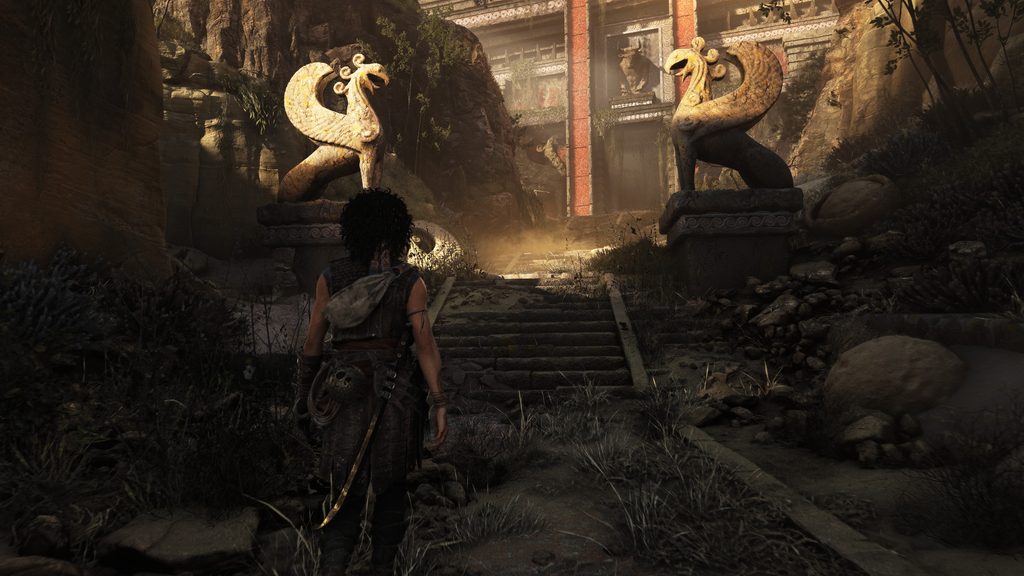
The genre shift is immediately noticeable. Resonance emphasizes exploration, climbing, tomb diving, environmental puzzles, and ancient ruins. It reminds me a lot of the modern Tomb Raider games, and I mean that in a good way.
The stealth-focused gameplay has not disappeared either. Instead, it has morphed into something closer to survival horror. You spend a lot of time avoiding combat and hiding from The Beast and other horrors.
I appreciated that Resonance was not just more Plague Tale. A spinoff should be allowed to experiment. The island gives it a different identity while still fitting neatly within the universe. Minoan ruins, the mythological labyrinth, and the horrors buried inside create a strong cosmic-horror atmosphere that builds as you progress.
I kept questioning what was buried beneath the island and how it connected to everything we already knew from the first two games.
THE ISLAND CARRIES THE CAST
The island is more interesting than most of the cast.
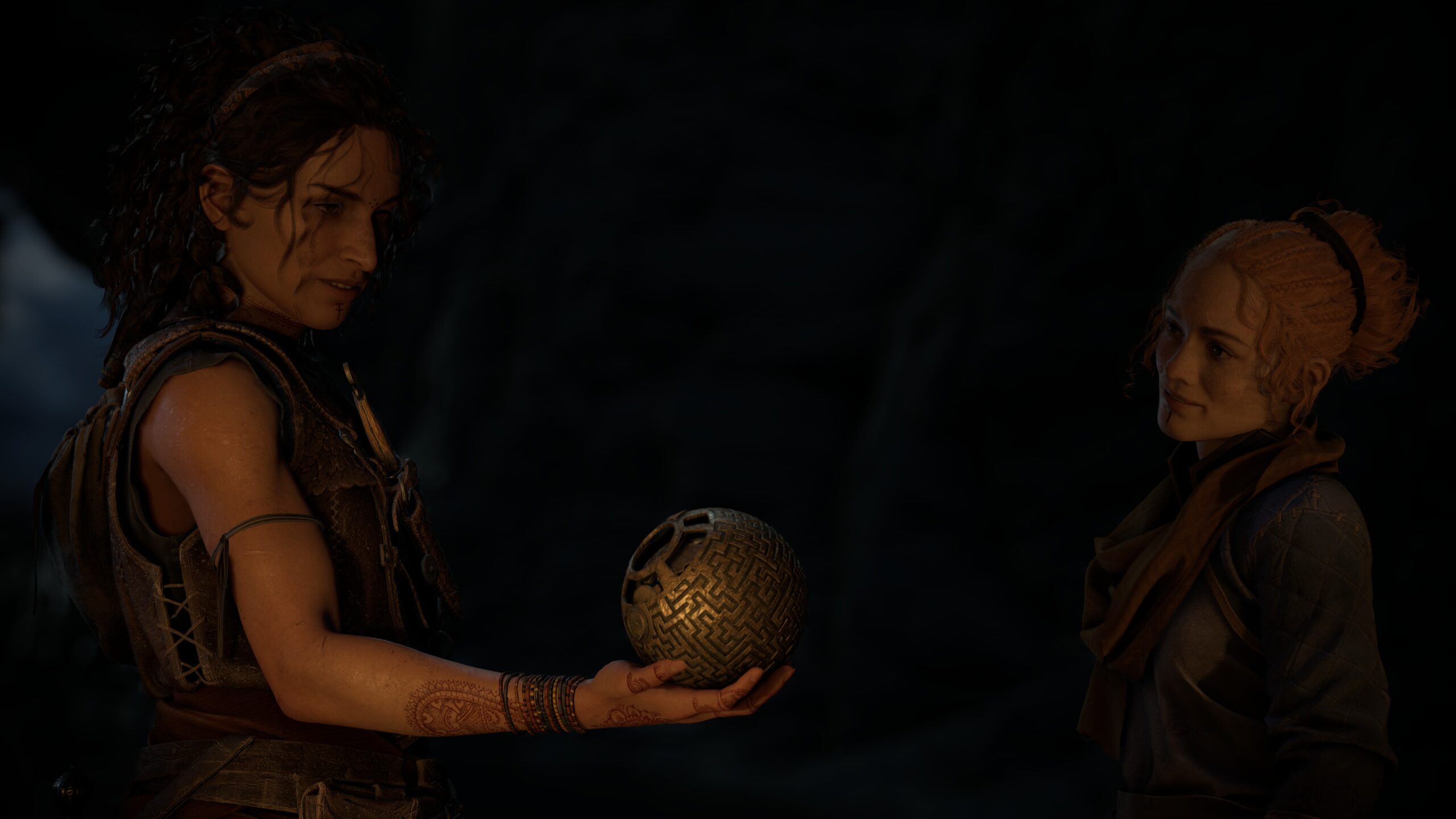
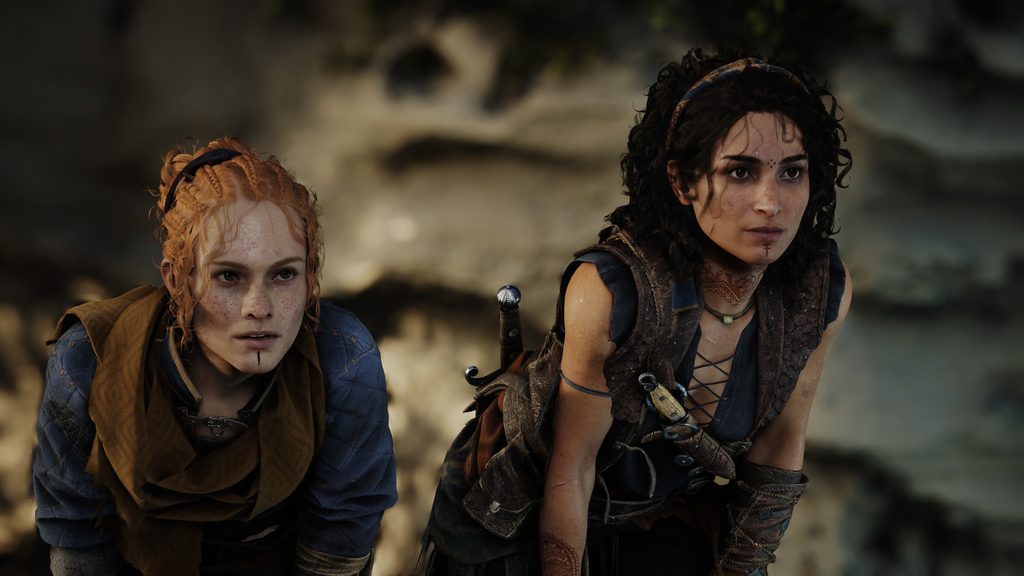
Sophia is fine as a lead. She is not annoying, poorly performed, or badly written. She is just not particularly memorable. Her early motivations amount to wanting treasure, discovering more of the island, encountering The Beast, deciding she wants to get the fuck out, and then being forced forward by Faro. For a significant portion of the game, the mystery carries Sophia more than Sophia carries the mystery.
Leni is… well, she exists. I never clicked with her. She immediately comes across as the quippy support character, and I spent much of the game distrusting her. After Sophia’s gang is betrayed and left in ruins, I thought Leni was the traitor for half the game.
She is not. But once Faro and the remaining plunderers capture her, she largely disappears from the story until her dramatic death. Sophia’s reaction makes complete sense; mine was muted. Their relationship never felt developed enough to make me care about Leni, leaving very little emotional payoff.
Irene is the cast’s major low point. Her reveal as the traitor surprised me mostly because she had been such a non-character beforehand. Her motivations are severely under-explained, reduced to “Faro is bad” without enough character work to explain why she would go this far. Ultimately, she was completely forgettable.
SOPHIA AND FARO GIVE THE STORY ITS TENSION
The strongest new character relationship emerges in the second half, when Sophia and Faro are forced to work together.
Initially, they are completely at odds. Faro thinks Sophia is the traitor; Sophia thinks his obsession with the island’s treasure has driven him mad. Working together complicates that opposition. Their changing understanding of one another and their motivations gives Sophia much more to work with emotionally.
Faro becomes far more compelling than he initially seemed, and this is where Sophia is allowed to shine. She never becomes as strong a character as Amicia, but her relatability improves dramatically once she has someone capable of generating real dramatic tension to bounce off.
Sophia works much better with a relationship more complicated than “friend I care about” or “person standing in my way.”
SHALLOW COMBAT, SMART RESTRAINT
Combat is the game’s weakest part, and Resonance seems to know it.
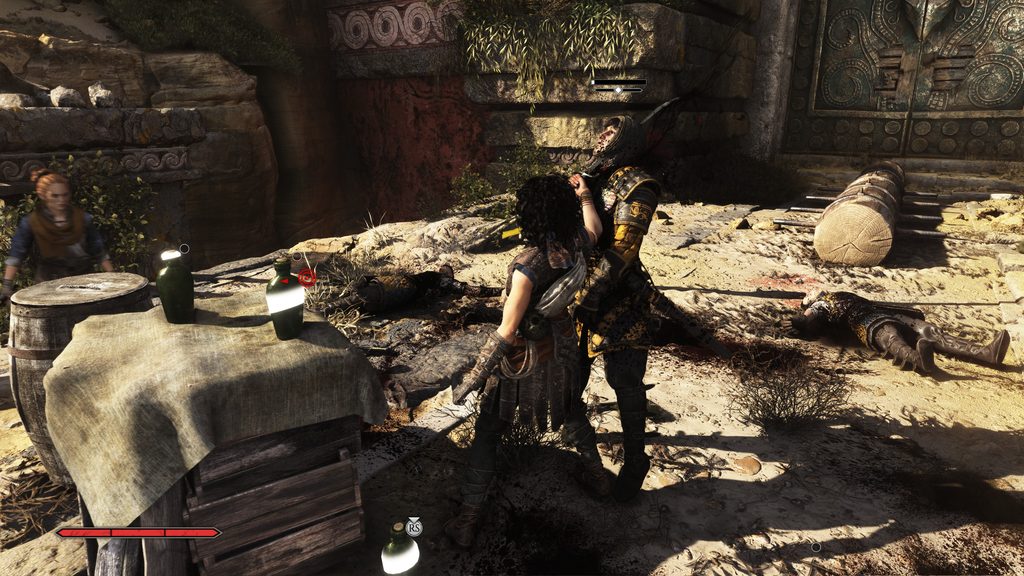
It is basic, parry-focused melee combat. Parryslop, if you will. Functional and responsive enough, but it never develops meaningful depth. Very little mechanically distinguishes it from dozens of other modern action games.
Crucially, Resonance never drowns itself in combat. The second half dramatically reduces its frequency and increasingly emphasizes exploration, puzzles, traversal, discovery, horror, and narrative beats.
If the final few hours had devolved into combat-room spam, this flimsy model would have become exhausting and dragged the whole game down. Instead, combat mostly stays out of the way. That restraint is a big part of why Resonance works.
DISCOVERY IS ITS OWN REWARD
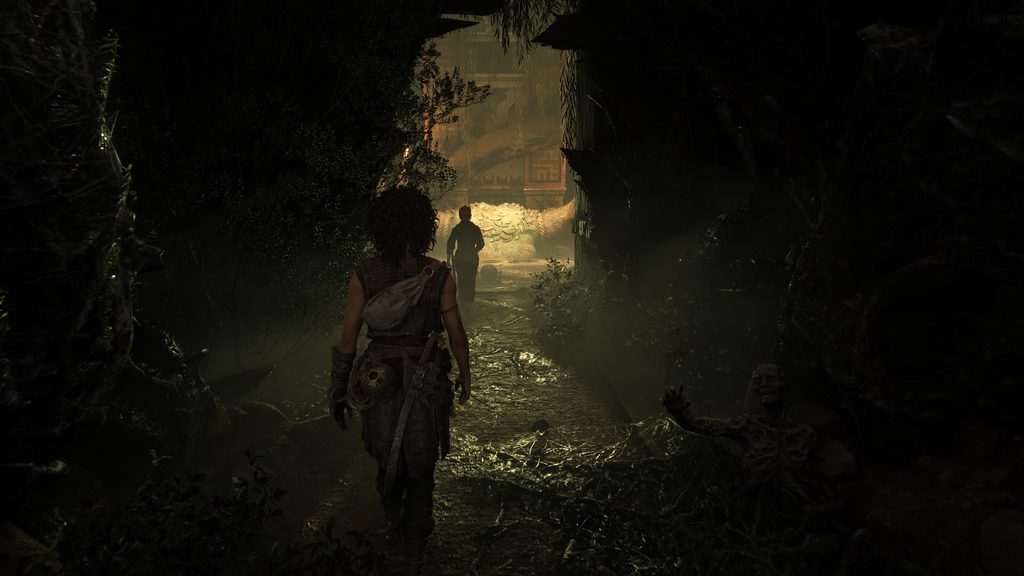
Resonance is among the best-looking games I have played this year. Island vistas, ancient architecture, underground environments, the labyrinth, and stunning lighting create an incredible atmosphere.
The facial animation and motion capture are also excellent, paired with strong voice acting. It runs remarkably well relative to how good it looks. I had it locked at 60 FPS on the Ultra preset with FSR 4 Balanced, noticing only slight shimmering in certain scenes.
More than anything, the presentation contributes to the exploration fantasy. The art direction and sheer visual fidelity make discovery itself feel rewarding.
THE REVELATION THAT MAKES IT A PLAGUE TALE
Major late-game spoilers follow. Skip to the verdict if you want to discover the island’s central revelation yourself.
The reveal that Theseus is actually Ariadne is a brilliant twist on the original myth. Learning that Asterion is her brother, and that he was a Macula Carrier, creates a full-circle connection to the original games.
Ariadne was his Protector. This is the moment when the spinoff fully justifies itself: you are not playing as the Protector, but as a third party discovering the aftermath.
Ariadne faced the same impossible relationship that came to define Amicia and Hugo, but failed to fulfill the Protector’s final responsibility. The consequences survive long after both siblings fade into the Greek myth of the labyrinth and the truth is lost to history. Sophia ultimately has to resolve what Ariadne could not.
Amicia and Hugo were not important just because they were Amicia and Hugo. Their relationship was one instance of a much older cycle.
Carrier. Protector. Love. Refusal. Catastrophe.
Eventually, an impossible choice has to be made with civilization hanging in the balance.
THE SAME TRAGEDY, EXPRESSED DIFFERENTLY
There was never a need to reproduce the original games’ exact iconography. The rats were one manifestation of the Macula’s horror. Amicia and Hugo were one manifestation of the tragedy between Carrier and Protector.
Resonance expresses those underlying ideas through a different century and culture, a different monster and Protector, and a different genre emphasis. Underneath it all, the fundamental tragedy remains.
That is much more interesting than simply giving us another child with the Macula and another sibling trying to protect them.
The heartbreak still works, even if it never hits as hard as Amicia and Hugo. Realistically, it could not: we spent two entire games with those characters. What matters is that the echo feels intentional and earned without simply recreating Requiem.
I started Resonance thinking it was a good-looking, competent action-adventure game. Sophia, the combat, and the new cast were not grabbing me. But the deeper the island mystery went, the better it became. Mythology, exploration, atmosphere, and historical tragedy gradually became far more compelling than I expected.
It has noticeable weaknesses, but it understands its strengths and increasingly prioritizes them as it goes on.
VERDICT
An uneven cast, with Faro the only real standout, and mediocre combat hold Resonance: A Plague Tale Legacy back in noticeable ways. But those weaknesses do not diminish the strength of its exploration, level and environmental design, atmosphere, presentation, and narrative.
More than anything, Resonance proves that A Plague Tale has room to exist beyond Amicia and Hugo. It understands the impossible relationship at the series’ center well enough to explore it differently, and it has made me excited for the future of this IP.
8/10
Reviewed by VG Frogman
Platform: PC
Publication date: 10/12/2026