
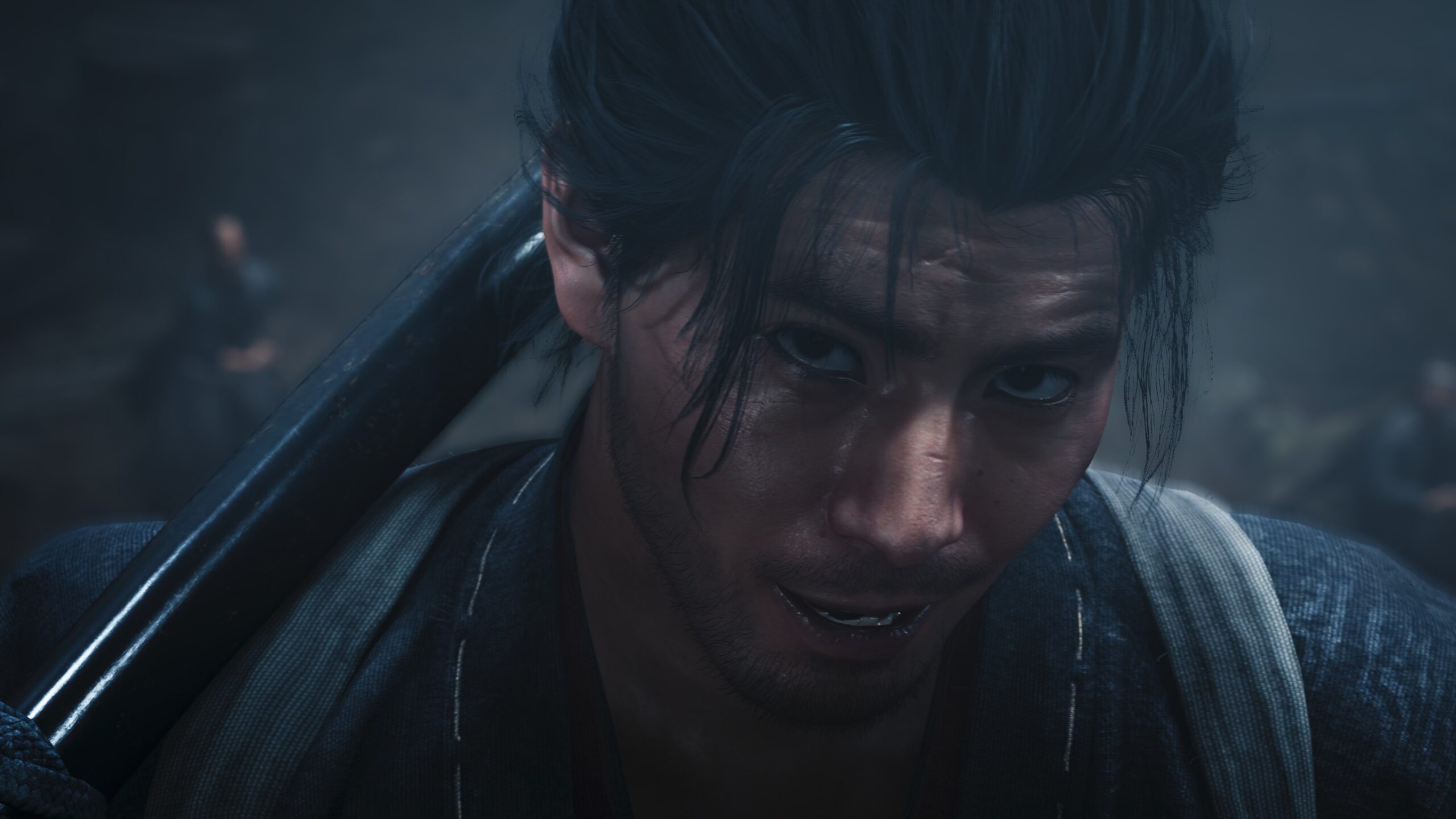
Onimusha aligns its best fights with a simple idea: the struggle itself can be the pleasure. Superb bosses and focused linear levels deliver that promise, while Eastern Kyoto’s repetition shows how easily meaningful challenge becomes busywork.
THE STRUGGLE IS THE POINT
What is the meaning of life? Onimusha: Way of the Sword has a refreshingly direct answer: life is struggle, and you might as well learn to enjoy it.
Musashi enjoys fighting from the moment we meet him. Strong opponents relish the chance to face him. Improvement and worthy opposition are things to embrace rather than merely endure.
That bluntness works because the narrative and mechanics make the same argument. A powerful enemy is not simply an obstacle between you and the next cutscene. The struggle itself is the point.
Unfortunately, the repetitive Eastern Kyoto content regularly forgets what the rest of the game understands so well.
CHALLENGE HAS A PURPOSE
The core swordplay is some of the most satisfying I have experienced since Sekiro. Timing, defense, counters, parries, and reading an opponent all matter.
As difficulty increases, the game generally asks you to engage more deeply with those systems instead of merely enduring bigger health pools, higher damage, or obnoxious movesets.
That makes strong opponents exciting rather than exhausting. The mechanical reaction is, “Holy shit, this guy is strong.” The narrative reinforces, “Good. This is a fight worth having.”
The game’s difficulty has a thematic function. Testing yourself against a worthy opponent is one of the things it believes makes life’s struggle worthwhile.
DIFFICULTY NEEDS MORE THAN FAMILIAR SURFACE FEATURES
Many Soulslikes understand the external language of difficulty: hard enemies, repeated attempts, mastery, and eventual victory. Those ideas do not always connect to the rest of the game.
When combat is difficult but the surrounding story gives you little reason to care about the struggle, the challenge can feel arbitrary. The game is hard because games of this type are expected to be hard.
Onimusha consistently gives that struggle a purpose. Strength is forged through opposition, and Musashi actively enjoys testing himself. The player and protagonist have aligned reasons to keep fighting.
The game spends its runtime convincing you that overcoming a difficult opponent can be one of life’s greatest pleasures.
THE BOSSES BRING EVERYTHING TOGETHER
The major bosses are fantastic expressions of the combat system. You read attacks, learn timings, adapt to phase changes, and eventually master the encounter.
Characterization and narrative framing make them feel like events rather than routine progression checks. Losing usually makes you want to try again: the opponent is interesting, the fight is enjoyable, and improvement is tangible.
There are also no run-backs. Failure keeps you focused on the encounter instead of wasting time getting back to the part you wanted to play.
The themes and reward loop are in complete alignment. At its peaks, this is some of the best boss design I have encountered in the genre.
THE LINEAR LEVELS ARE EXCELLENT
I greatly preferred the focused linear sections to Eastern Kyoto’s semi-open structure. The pacing is strong, and exploration exists without becoming a confusing maze or collectathon.
Encounters feel authored and intentional. Enemy composition, visual escalation, pacing, and the buildup toward a boss all benefit from that control.
These levels move the adventure forward while still leaving enough room to explore and breathe. They serve the campaign far better than the Eastern Kyoto sections.
EASTERN KYOTO CONFUSES STRUGGLE WITH REPETITION
Eastern Kyoto is the game’s most glaring weakness. Visually similar spaces, repeated content, circuitous routes, and awkward backtracking make it feel artificially stretched out.
The normal enemy roster cannot support the amount of fighting the area demands. Eventually, I avoided encounters because the enemies had nothing left to teach me.
The two recurring minibosses have the same problem. Early rematches can demonstrate increasing mastery. Once they are solved, their repeated appearance becomes busywork.
A great boss makes you think, “I haven’t solved this yet, but I want to overcome it.” Another encounter with the same miniboss makes you think, “I solved this three fights ago. Why the hell am I doing it again?”
There is a difference between meaningful resistance and fighting the same asshole over and over. Eastern Kyoto repeatedly mistakes one for the other.
THE ENEMIES STOP GIVING THE COMBAT ENOUGH WORK
Enemy variety is the real limiter. Normal enemies are fine individually, but too few create genuinely different behavioral problems. As your mastery grows, ordinary encounters become speed bumps.
The game needs more archetypes, combinations that materially change your priorities, and stronger late-game escalation outside its main bosses. Instead, much of the connective content repeats problems you solved hours earlier.
The frustrating part is that the combat itself never becomes boring. It still feels excellent. The enemies stop giving that system sufficiently interesting work to do.
VERDICT
Onimusha: Way of the Sword has excellent swordplay, superb bosses, strong linear levels, and a character fantasy that gives its challenge a convincing purpose.
Eastern Kyoto is genuinely bad, and the limited enemy variety prevents the campaign from sustaining the quality of its best moments. It gets close to being a masterpiece, but too much connective content falls short.
Its strongest encounters understand that challenge is not just a toll you pay to reach the fun. The challenge itself is the fun. The game falters when that challenge stops asking anything new of you.
9/10
Reviewed by VG Frogman
Platform: PC
Publication date: 10/10/2026