
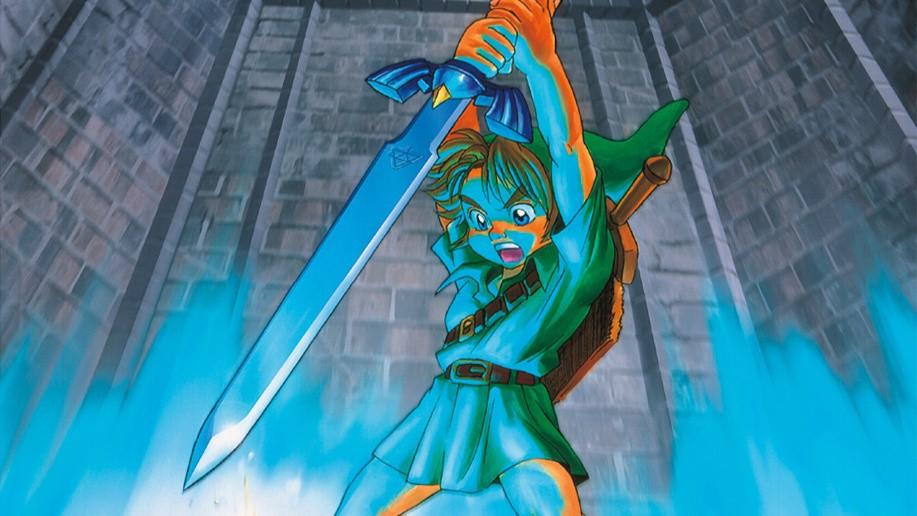
The Switch 2 remake was my first time playing Ocarina of Time. Fifteen hours later, its dungeons, pacing, and trust in the player made it the first Zelda game I’ve actually enjoyed.
REVIEW
How does a nearly 30-year-old game made for children manage to respect the intelligence of its players more than the majority of modern AAA games developed for adults?
Modern AAA games increasingly remove opportunities for independent problem-solving, forcing companions to explain puzzles before you can take even 30 seconds to figure them out yourself. Navigation markers replace observation, sanding off uncertainty and eliminating the need to actually pay attention to the world around you.
Are these conveniences strictly bad? I don’t think so. Used poorly, they become a crutch that removes opportunities to engage with the game. Some of the older design philosophies that games left behind were just flat-out better.
I didn’t get to play Ocarina of Time as a kid, and I never found the time to go back and experience the original. The Switch 2 remake is my first experience with it, and I can confidently say the hype isn’t just nostalgia. Ocarina of Time is, essentially, a perfect video game.
WHAT OCARINA UNDERSTANDS ABOUT PLAYER ENGAGEMENT
Just from playing this remake, it became abundantly clear to me how important the original game was in developing the design language of 3D action-adventure games. From lock-on targeting to equipment-based progression and environmental puzzles, you can see the fingerprints of Ocarina of Time on countless games that followed it, and for good reason.
The remake appears to preserve the core structure of the original while taking a relatively conservative approach to modernization. The visuals and controls are updated, and there are plenty of quality-of-life improvements. The game still gives you enough information to work out what you’re supposed to do.
NPC dialogue, environmental details, and the equipment you acquire all give you information to interpret. Threads of Time offers useful reminders, and its advice usually leaves you to work out the solution.
In God of War Ragnarök, companions frequently explain puzzle solutions before you’ve had much of an opportunity to work things out yourself. It’s an approach that seems almost afraid to let the player slow down and think. This goes beyond accessibility or difficulty. Good guidance gives players enough information to understand the problem and the time to solve it.
WHY THE DUNGEONS WORK
This is a game made for children, so it isn’t especially difficult by any stretch. The puzzles aren’t going to tax your brain to its limits, but they still require observation, experimentation, and an understanding of the game’s mechanics.
In the Fire Temple, you have to drop bombs through holes in a bridge. It takes a moment of looking at the environment, thinking about the tools you have, and testing your hypothesis. Mechanically, it’s an extraordinarily simple puzzle. How often do modern games give you room to slow down and think about something this simple? A companion might tell you what to do, or the game might slap a navigation marker directly over the hole.
My understanding is that much of the frustration in the original Water Temple came from constantly pausing to equip and unequip the Iron Boots. Making that process more intuitive in the remake allows the level design to breathe. You can focus on how manipulating the water level changes the routes through the interconnected dungeon.
As you acquire new equipment, your understanding of the world changes. New possibilities open up, and each new area gradually ramps up the challenge. I found the Shadow Temple to be the best example of that escalation. It killed me several times for being careless.
I never found the bosses especially challenging. The real joy came from understanding and applying an evolving set of tools throughout the adventure. By the time I knew how to execute a solution, I’d already had the satisfaction of figuring it out.
NOTHING OVERSTAYS ITS WELCOME
The way everything fits together like a jigsaw puzzle is where Ocarina truly shines. The adventure alternates between exploration, dungeons, acquiring new abilities, and narrative progression. Each new area introduces fresh ideas while simultaneously building upon your existing knowledge. Even the transition from childhood to adulthood changes how you interact with familiar environments, giving you new ways to explore a world you thought you already understood.
Mechanics are developed just enough to become satisfying without overstaying their welcome. There are no substantial stretches where the game feels stagnant, repetitive, or padded out simply to increase playtime. My playthrough took about 15 hours, and it felt complete and consistently rewarding.
Too many modern AAA games fall back on repeated activities and padded runtimes with little meaningful mechanical development along the way. Content volume becomes a selling point in itself, regardless of what it contributes. A 100-hour game full of meaningless content isn’t providing more value than a tightly paced, mechanically rich 15-to-20-hour experience simply because it’s longer.
Each mechanic in Ocarina serves its purpose and makes room for the next one.
WHAT THE REMAKE GETS RIGHT
The remake improves the presentation, movement, camera, equipment access, and general usability. Those changes make the game easier to interact with while preserving the design philosophy underneath it.
I’ve seen criticism from returning players that some of the puzzles have become too obvious or simplified. I can’t directly compare the original and the remake, but as a newcomer I found the puzzles consistently engaging without ever feeling obtuse or convoluted. How much of the original’s difficulty came from poor quality of life, and how much came from meaningful challenges?
Constantly pausing the game to manage your equipment is what I’d call subtractive friction. It pulls you out of the experience. A problem that asks you to examine your surroundings, consider your equipment, and experiment with possible solutions is additive friction. It makes the game more engaging.
Nintendo removed much of the inconvenience that once surrounded Ocarina. The moments where you have to stop and think are still there, and the remake gives them room to work.
A DIRECTED GAME CAN STILL GIVE PLAYERS FREEDOM
Breath of the Wild and Tears of the Kingdom are obvious examples of modern games that emphasize experimentation and independent discovery. I didn’t enjoy either of them, despite those qualities. I also didn’t enjoy A Link to the Past when I went back to play it. This remake is the first Zelda game I’ve actually enjoyed.
What I think distinguishes Ocarina is its very clearly thought-out, authored progression. Every discovery, dungeon, and new ability contributes to a deliberately structured and paced adventure.
Open-ended freedom and authored progression are two distinct design philosophies. A game built around open-ended progression can be just as great as an authored one, and an authored experience can be just as terrible as the worst open-world slop you can imagine. It comes down to how well the director executes that experience.
Ocarina demonstrates that a highly directed adventure can still demand independent thought and give players a tremendous amount of agency. I had a clear path through the game and plenty of freedom to figure things out for myself.
WHAT MODERN GAMES FORGOT
I keep coming back to the distinction between game design in 1998 and game design in 2026.
The original Ocarina of Time helped define what 3D action-adventure games could become. The remake demonstrates how well the principles behind it still work today.
Modern technology has made games more accessible, cinematic, and mechanically sophisticated. Those advances can make a game easier to play and more impressive to look at, but they can also get in the way when they take away decisions the player could have made. Ocarina gets more out of thoughtful progression, meaningful friction, and disciplined pacing than a lot of games get out of sheer complexity, production values, or content volume.
I don’t think every developer needs to head to the Temple of Time and return to 1998. I do think this remake deserves to be studied as an example of how to modernize a game and preserve the pleasure of discovery.
VERDICT
I found the narrative to be the least compelling part of the game, partly because every major twist had already been spoiled for me over 30 years of being a gamer. It still supports the game’s progression, especially through the seven-year time skip. The bosses were rarely challenging, but they were fun as puzzles in their own right.
The game’s individual components are developed precisely as much as they need to be. Nothing feels underutilized, and nothing is stretched so far that it becomes repetitive. Not a single thing felt extraneous, underdeveloped, unnecessarily prolonged, or otherwise incomplete.
Ocarina of Time is a 10/10. I went into the remake without any childhood memories of the original, and it still belongs in that rarefied atmosphere alongside Super Metroid and very few others. It’s a perfect video game.
10/10
Reviewed by VG Frogman
Platform: Nintendo Switch 2
Published: 11/18/2026