
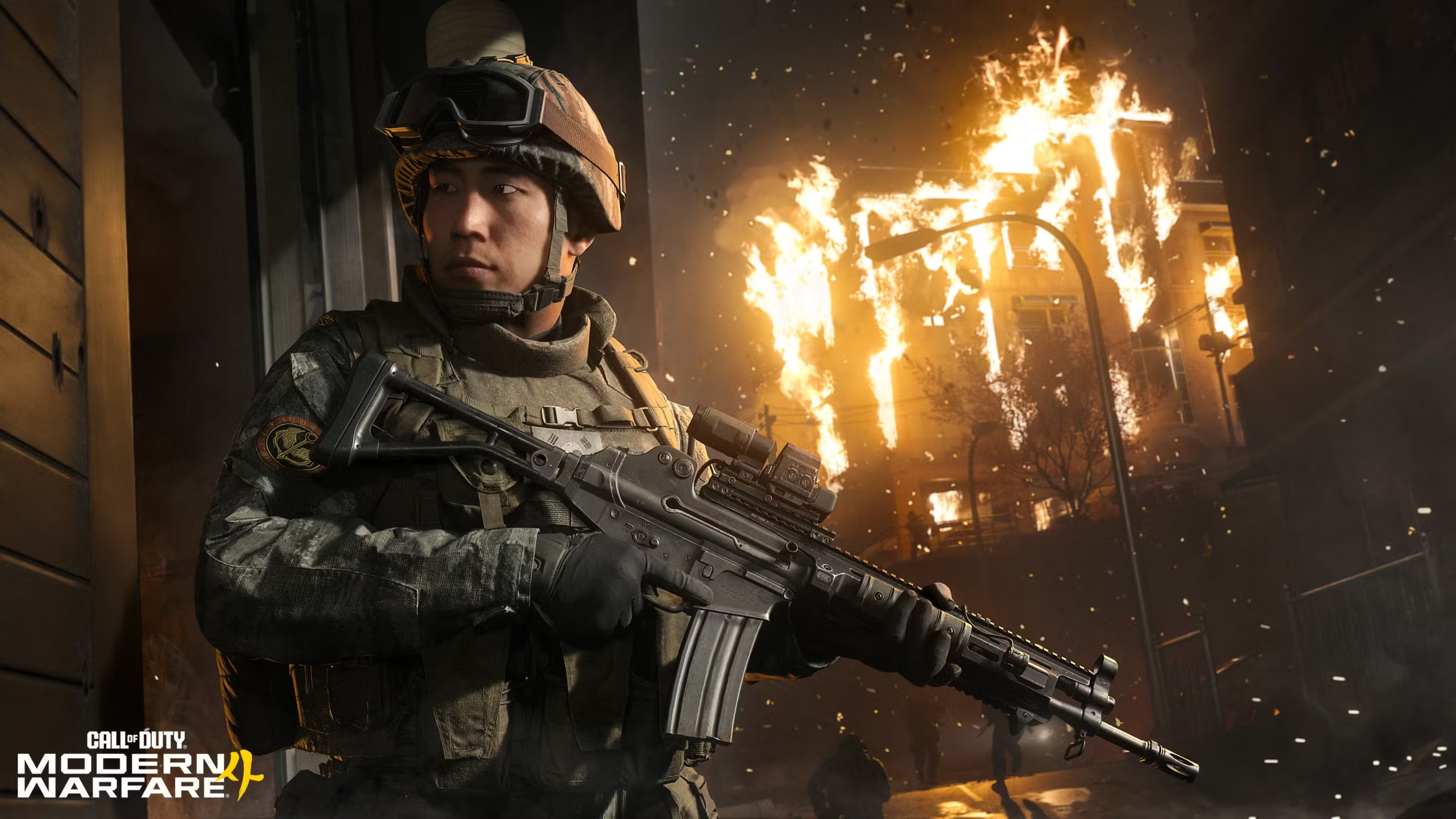
Modern Warfare 4 works because it makes its operators smaller and the war bigger again, combining reboot-era special forces missions with the regular-soldier warfare that defined Call of Duty.
REVIEW
Something I have increasingly disliked about the rebooted Modern Warfare series is how every game since 2019 has turned Task Force 141 into the Avengers with tactical gear. They became the center of every conflict, the people singlehandedly saving the world, and characters who felt increasingly impossible to kill. Even many of the named villains started to feel less like soldiers and more like larger-than-life supervillains.
Modern Warfare 4 abandons that approach almost entirely. The operators are smaller, the war feels bigger than any one person again, and the result is the best Call of Duty campaign since Modern Warfare 2019. It combines the best parts of the reboot-era special forces missions with the regular-soldier warfare that defined the series from the beginning.
CALL OF DUTY FEELS LIKE WAR AGAIN
The biggest strength is the shift toward South Korean Marine Private Park. Park feels like an actual soldier thrown into a brutal war rather than another legendary operator capable of turning the tide alone. Task Force 141 exists inside the conflict instead of being the entire conflict.
The large battles reinforce that idea constantly. The war feels like it will continue whether Park survives or not, and the player is only one small part of a much larger machine. A beach invasion later in the campaign is the clearest example. Soldiers are cut down all around you while a massive front line stretches across the battlefield, immediately recalling the WWII-era Call of Duty missions built around D-Day and Stalingrad.
You are not the superhero arriving to save everyone. You are another soldier trying to survive the same battle as everyone else. The protagonist exists inside the war instead of the war existing to make the protagonist look cool.
THE SOF MISSIONS ARE BETTER BECAUSE THEY ARE NOT EVERYTHING
I still like the reboot-style special forces gameplay when it is done well and used in moderation. Modern Warfare 4 takes clear inspiration from the best missions in 2019, emphasizing deliberate movement, tactical raids, and more controlled pacing. The Price missions work because they are a tonal shift rather than the entire campaign.
Even the louder special forces sequences avoid some of Modern Warfare 2‘s more ridiculous action-movie excesses. Ghost still gets his operator-porn moments, but they feel earned because the campaign is not constantly treating him like a demigod. These characters feel elite without feeling superhuman, and that distinction matters.
PEOPLE CAN ACTUALLY DIE AGAIN
Previous games made their named characters feel functionally immortal. That destroys tension. If everyone already knows Price, Ghost, Gaz, and the rest will survive anything, there are no meaningful stakes.
Modern Warfare 4 is willing to suddenly and violently kill characters, and those deaths do not feel like cheap shock value. They make sense within the narrative and make the new cast feel more grounded because nobody seems protected by franchise marketing status. I came to care about Private Park’s squadmates specifically because their mortality restored a sense of danger the series has been missing for years.
Mortality does not make these characters less important. It makes them feel human again.
MISSION VARIETY WITHOUT FORGETTING WHAT COD IS
The campaign also experiments with structure without forgetting why people play Call of Duty. Linear shooting galleries are not a design failure. They are one of this series’ core strengths, and Modern Warfare 4 understands that.
There are infantry battles, special forces raids, a North Korean perspective, bombastic spectacle, and quieter stealth sequences, but they all orbit the same fundamental FPS core.
The North Korean village sequence is especially memorable. You search for a traitor, interrogate civilians, and the game even allows you to execute them without immediately scolding you or forcing a reload. It is uncomfortable, but it is also consistent with the role the game asks you to inhabit. Letting the player serve a brutal regime and then sanitizing what that means would feel dishonest.
It is also one of the few places where the campaign gives the player meaningful agency. Later choices generally result in mission failure if you choose incorrectly rather than creating real branches, and that is one area I would have liked to see developed further.
STRANDED IS THE EXCEPTION
The campaign’s biggest structural experiment is Stranded, essentially a DMZ tutorial mission where you scavenge for weapons and supplies, return them to base, upgrade your kit, and complete three objectives in any order.
I actually enjoyed Stranded as a mission, and I think an entire game built around that loop can work. Inside this campaign, though, it hurts the momentum. Traversing the open map and scavenging introduces a lot of downtime. Fast travel exists, but using it means skipping resources and upgrades.
That creates a systems conflict: engaging with progression hurts the pacing, while preserving the pacing means sacrificing satisfying progression. I would have preferred Stranded as a tighter linear mission. It is nowhere near as bad as some of the open-world missions in previous Modern Warfare campaigns, but it is still a poor fit for an otherwise extremely well-paced game.
ARMOR AND PLAYER FRAGILITY ADD UNNECESSARY FRICTION
The gunplay feels good overall and the enemy density supports the sense of being in a real battle, but armor and player fragility introduce unnecessary friction.
The normal combat loop already involves taking damage, retreating into cover, regenerating health, and re-engaging. Armor plates add another recovery layer without making that loop more interesting. Armor is limited, takes time to manually reapply, and sits on top of health that still regenerates normally.
In practice, plating is just another form of manual regeneration. The main difference between giving the player a larger health pool and using this armor system is that armor makes you spend more time outside the fight. For this campaign, that is a strict negative because it adds friction without meaningfully increasing decision-making.
THE ENDING ACTUALLY FEELS FINAL
I will not spoil the ending, but it is one of my favorite Call of Duty endings in a long time. It is tragic, surprising, and genuinely conclusive. I do not think this story could have rationally ended any other way, and it feels like the right place to close this chapter.
A Modern Warfare 5 could still exist, but it would not need to revolve around immortal operators saving the planet again. If this is the direction the series continues in, Modern Warfare may finally be moving back toward stories about soldiers instead of superheroes.
VERDICT
Saying Modern Warfare 4 is merely “good for modern CoD” undersells it. This is a genuinely strong FPS campaign and easily the best Call of Duty campaign since Modern Warfare 2019 by a wide margin. It succeeds by returning to what the series has historically done well while learning from many of the mistakes that dragged down the previous games.
Modern Warfare 4 remembers what Call of Duty was always really about. Its open mission experiment and armor system are meaningful flaws, but they do not outweigh how well the campaign restores scale, mortality, and the feeling of being a soldier inside a war rather than a superhero standing above it.
8/10
Reviewed by VG Frogman
Platform: PS5 Pro
Published: 10/23/2026