
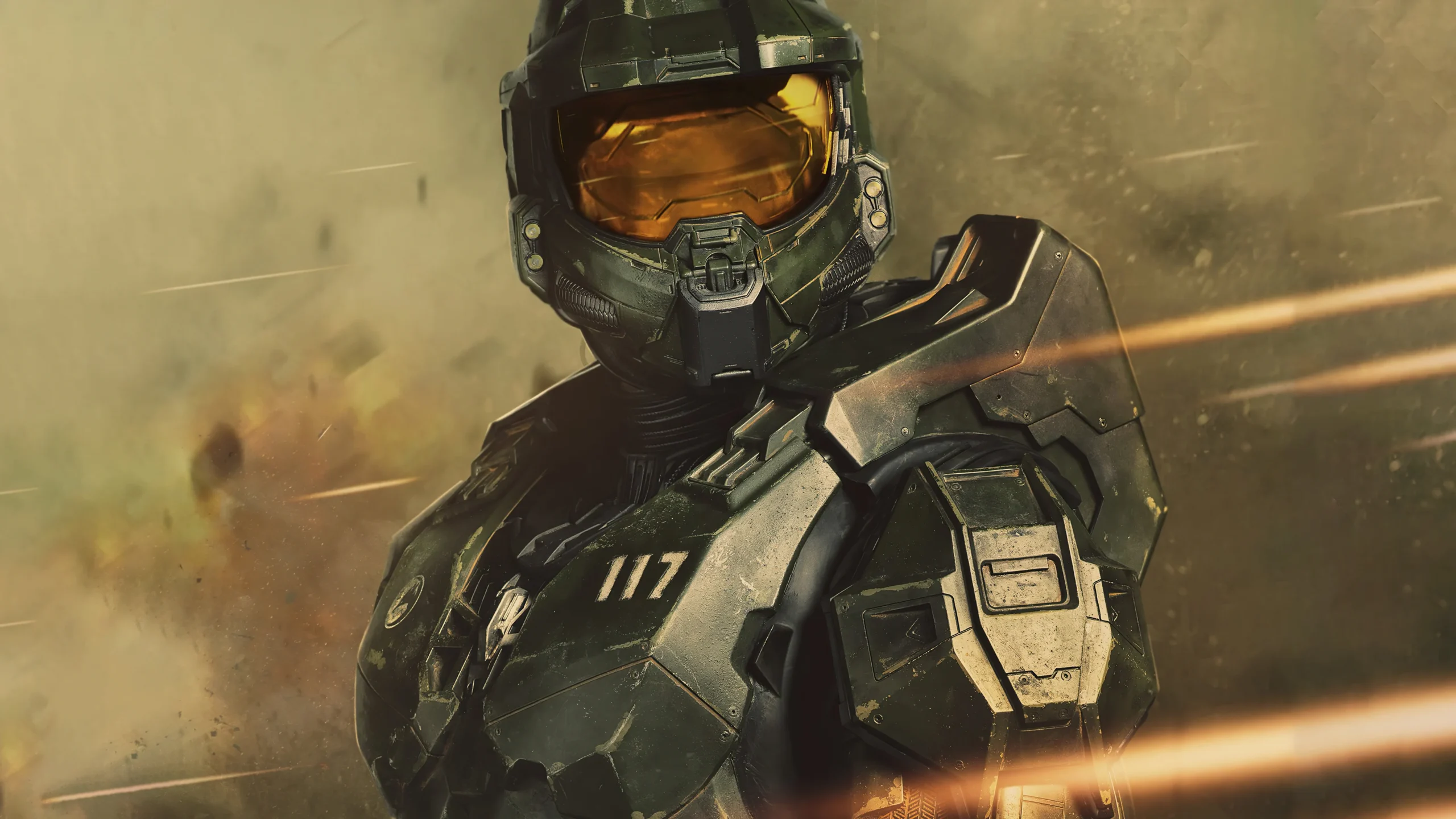
Campaign Evolved preserves much of Halo’s combat while repeatedly changing the pacing, discovery, tone, and encounter logic that made Combat Evolved work. The cumulative damage matters far more than any single alteration.
Spoiler note: This review covers the full campaign, including the new prequel missions and the ending. Skip to the spoiler-free verdict.
THE CUMULATIVE DAMAGE
Halo: Combat Evolved is not a sacred cow that can never be questioned. It is my favorite Halo and an absolute masterpiece, but it has flaws.
Many features dismissed as dated or flawed are also intentional design decisions. Campaign Evolved demonstrates their importance by changing them without preserving what they accomplish.
Individually, some alterations seem minor. Together, they reveal a fundamentally different philosophy of pacing, discovery, combat, and storytelling.
The original’s achievement extends well beyond its influence on console FPS controls. The remake retains much of the shooting while repeatedly undermining the structure that gave it meaning.
THE PREQUELS ARE THE FIRST WARNING SIGN
The new prequel missions should be Halo Studios’ strongest argument for this remake. They have no Bungie mission structure or classic pacing to lean on. They show what the team creates from scratch.
I wanted new content. What I got was offensively boring, poorly paced, badly written, and internally inconsistent.
Combat spaces lack atmosphere and memorable composition. Weapons seem scattered without a meaningful sandbox arc or a sense of discovering new tools. Wraiths fire mortars inside a hangar, creating an encounter that feels indifferent to the place it supposedly occupies.
Too many rooms amount to killing everything before you can progress. Their similar environments and loosely assembled enemy groups feel more like an amateur Forge project than deliberate Halo encounters.
One Banshee survival encounter stood out because its AI broke and became largely passive. That is the wrong kind of memorability.
The original campaign has a beach assault, gravity lift, snowy bridges, swamp, Library elevator, and reactor room that remain vivid years later. The prequels mainly left memories of broken behavior and nonsense.
They feel like generic science fiction wearing Halo’s aesthetic as a skin suit.
THE COVENANT BECOMES A GENERIC VILLAIN
A Covenant preserve where captured humans are hunted for sport reduces an interesting alien religious empire to cartoon cruelty.
The Covenant’s violence is rooted in dogma, imperial ambition, and the threat humanity poses to its religious order. Saturday-morning monsters running a human hunting preserve are a less compelling premise.
The introductory cinematic makes matters worse. Chief and Johnson trade fire with exposed enemies, then stand around while a Prophet introduces each client race as they pose like the fucking Ginyu Force.
It looks like a toy commercial. Combat Evolved teaches Covenant roles through combat: kill an Elite and watch the Grunts and Jackals panic. The remake stages an explanation of information that the original communicated through behavior.
Explain instead of show. Narrate instead of design.
The new Brute rage-control implant also changes the meaning of their allegiance. In Halo 2 and 3, pride, religious devotion, and loyalty to the Prophets are central to their role. Substituting technological control weakens that characterization and introduces a contradiction into the wider story.
BANTER REPLACES TENSION
Johnson being funny is not a problem. He has always had personality. Constant Chief-and-Johnson banter in a supposedly desperate situation is a problem.
The original uses sparse, functional, memorable dialogue. Johnson’s humor cuts through tension. In the prequels, banter fills the space where tension should exist, making the pair sound like they know they are in a buddy-cop game.
Lieutenant Williams has a potentially workable premise: ODST resentment toward Spartans, drawing on The Fall of Reach. Its timing is ridiculous.
She is a prisoner on a Covenant ship. Chief and Johnson save her and her Marines, and she immediately starts acting snide toward Chief. Knowing the novel explains the historical reference; it does not make that behavior convincing in the current life-or-death situation.
The writing prioritizes attitude and a deep lore reference over situational reality. Quip first, character second, tone in dead last.
Her eventual sacrifice also receives little convincing grief from Chief or Johnson. The game reaches for emotional weight without giving the reaction enough weight of its own.
LORE REFERENCES WITHOUT COHERENT LOGIC
Chief and Johnson are gathering navigation data to find the Covenant homeworld. Meanwhile, a Prophet is physically present and monologuing in front of them.
Capturing that leader would be a more direct and valuable route toward the strategic objective. Ignoring the obvious prize makes the mission feel built around a script rather than characters responding intelligently to their circumstances.
The prequels borrow Williams’ resentment from The Fall of Reach while disregarding major parts of the same book’s setup: the Mark V test, shields, Operation Red Flag, Chief’s fellow Spartans, and his emotional state before Combat Evolved.
Lore becomes flavor while the structure that gives it coherence is discarded.
EXPLAINING THE SHIELDS CREATES A CONTRADICTION
Prequel Chief wears Mark IV armor but has shields, despite the shield introduction tied to the Mark V test in the material the remake references.
Normally, I could accept a little gameplay dissonance. The problem is that the game then insists on explaining the same mechanics elsewhere.
The prequels allow overshields and active camouflage. Later, in the remade Pillar of Autumn, Cortana needs to patch Chief’s newer suit so it can use overshields.
Once the remake introduces that explanation, the earlier functionality becomes inconsistent. It cannot treat a mechanic as unexamined video-game convenience in one mission and establish incompatible rules for it in the next.
A BETTER PREQUEL ALREADY EXISTED
An adaptation of Chief’s Fall of Reach perspective would have supplied a stronger bridge into the campaign.
The Mark V test could teach shields. The shipyard sequence could introduce Johnson in context. The loss of Red Team and Linda’s critical injuries could lead into the Autumn’s escape.
That would reinforce the loneliness of Combat Evolved. Chief enters the ring after losing almost everyone he considers family, and the ending becomes the first moment he can really sit with that loss.
The material already existed and the remake was already referencing it. It could have deepened the original rather than adding contradictory filler.
When Campaign Evolved copies Combat Evolved, it often makes small things worse. When it invents new Halo, it shows much larger misunderstandings.
THE PILLAR OF AUTUMN
The remake opens with a longer Captain Keyes cinematic, a reference to Miranda, and the removal of the memorable “I don’t keep it loaded” pistol line.
Keyes sounds less like a calm commander handling a desperate situation and more like a frantic officer reading a script. The change weakens his characterization while lengthening the scene.
The overshield patch explanation also appears here, immediately raising the inconsistency with the prequels.
Johnson’s delivery feels stilted and the character animation stiff. Cortana’s altered intonation makes her feel more condescending and less naturally sardonic.
Everything has higher fidelity. The opening has less clarity, economy, and personality.
HALO
The broad scale survives, but the ring’s atmosphere does not. The original looks like a real place while remaining subtly strange. The more realistic remake loses much of that surreal quality, and the world somehow feels smaller.
Johnson also returns to his relatively minor original role after the prequels spend so long establishing him as Chief’s bantering partner. That shift is jarring.
Musical cues feel less deliberate. Repeating the rock anthem at the Marine lifeboats makes the presentation feel artificial compared with the original’s careful use of its soundtrack.
Sniper rifles are also far more readily supplied, and a Marine explicitly offers one to teach you the mechanic. The weapon pacing changes, while increasingly obvious instruction begins replacing discovery.
TRUTH AND RECONCILIATION
This is where the remake’s guidance becomes egregious. Cortana’s original tactical suggestion about taking high ground and eliminating Shades becomes an explicit instruction to destroy guns and rescue Marines.
The dialogue feels like verbal yellow paint. The gravity-lift transition loses its cinematic buildup, and Cortana repeatedly warns you to watch for invisible Elites.
At Keyes’ prison, he warns about invisible guards before markers appear directly over their heads. The game explains the threat and then removes the need to read it.
Keyes also respawns if killed instead of causing a checkpoint reset. That weakens the distinctive escort pressure of the return to the hangar.
The departure cinematic creates another contrived spectacle. Everyone boards the dropship except Chief, who remains outside so two Hunters can flank him before Keyes rescues him.
Why would Chief stay outside? Why would the Hunters charge down the hall instead of firing their cannons? The scene sacrifices internal logic for a cinematic moment.
The pattern is consistent: more explicit instruction, less player discovery, and spectacle that makes the characters behave less believably.
THE SILENT CARTOGRAPHER
This is the first main-campaign mission that did not feel pointlessly changed or significantly weakened.
The landing cinematics are still overlong. Adding Pelican chin guns also raises the question of why the aircraft do not simply do more of the work on the beach themselves.
That feature references Halo: The Flood, but otherwise this mission gives some welcome relief. Its familiar encounter structure largely survives.
ASSAULT ON THE CONTROL ROOM
The relief does not last. Small changes to level geometry and pickup placement start accumulating without an obvious benefit.
Active camouflage moves from its familiar placement near the tunnel to a new rocky hill. In the original, that pickup supports surprising or bypassing the Covenant on the following ridge. The distinctive zigzag ridge is also smoothed into a slope.
Those seem minor beside what happens at the Banshee bridge.
Originally, Cortana identifies the Control Room and asks you to reach it. The Elites sprint for the Banshees when you step onto the bridge. Taking one is a shortcut you earn through preparation, experience, or luck.
In the remake, Cortana directly tells you to steal a Banshee and prevent anyone else from taking it. The Elites no longer immediately race for them in the same way. The game guides you toward skipping the descent and fight up the pyramid.
A discovered advantage becomes the prescribed solution. That removes a meaningful piece of player agency and encounter knowledge.
This is a hole in the design, not just another cosmetic alteration. The mission actively teaches you to bypass content the original lets you earn the ability to bypass.
343 GUILTY SPARK
This is the campaign’s crucial turning point. The original builds dread as you move through the swamp and into a facility that feels familiar enough to recognize and strange enough to distrust.
The remake’s more literal, detailed art direction loses much of that liminal uncertainty for me. The original leaves room for imagination to do some of the work. The new presentation shows more while making the atmosphere feel less unsettling.
The crazed Marine also loses his ability to hurt you. In the original, executing him leaves silence in which to process what you just did. In the remake, he drops a bonus skull.
I have no objection to skulls generally. Rewarding this particular killing changes the tone of the moment. Unease and possible remorse become a collectible transaction.
The containment room changes the reveal too. In the original, both the player and the Marines can encounter the mutilated Elite before entering that room. You share their questions before discovering what happened.
Blood, abandoned supplies, and the absence of the human bodies make the room disturbing. Where did everyone go, and why was their equipment left behind?
The remake puts the Elite discovery inside the containment-room recording. Intact bodies are present before the footage, then disappear afterward. The original combination of physical evidence and conspicuous absence is lost, along with the gradual alignment between your discoveries and the Marines’ earlier journey.
Finally, escaping to the swamp becomes a multi-minute wave clear. Remaining Flood receive markers, and you must finish the combat checklist before Guilty Spark ends the mission.
The original Monitor’s appearance and abrupt abduction are disorienting. Events happen faster than you can fully understand them. The remake gives you a conventional objective, makes sure you complete it, and then permits the transition.
That smoothness removes the suddenness and uncertainty the sequence was designed to create.
THE LIBRARY
The original Library is repetitive and exhausting. Those qualities are not automatically accidental flaws. They help create the feeling of surviving an endless, incomprehensible facility while following a machine you do not really understand.
Guilty Spark hums and talks overhead, dropping hints about Halo’s function. He can even refer to sterilizing life, but his comments compete with your immediate need to survive.
The remake foregrounds that information in an introductory cinematic. A strange and potentially overlooked hint becomes a direct explanation before Cortana’s later revelation.
There is a good new idea here: descending deeper into worsening Flood infestation creates a convincing journey into hell.
The added light-bridge puzzles are less convincing. They offer variety, but they also break the sustained exhaustion by giving you a neat spatial task to solve.
The final section is comparatively short and culminates in Flood Juggernauts rather than the original desperate push through an enormous horde toward the Index.
Even the strong descent concept has an awkward logic problem. Placing the Index at the bottom, beside the worst containment infestation, feels less convincing than starting in the infection and ascending away from it.
Credit is due for an interesting visual progression. Its execution and the surrounding explanatory changes still weaken the original tension.
TWO BETRAYALS
Cortana’s revelation about Halo lands less forcefully because Guilty Spark has already foregrounded its purpose in The Library.
Her performance also lacks the original’s palpable fear and anger. The sharper, more arrogant delivery makes the situation feel less like something that has shaken her to the core.
The more damaging mechanical change is how you disable the pulse generators. Originally, Chief uses his own shields, leaving him vulnerable as Flood and Sentinels attack.
That improvised solution reinforces desperation. Every generator creates an “oh shit” moment followed by a fight to survive.
Now, you destroy three conduits in each room. I could run around, melee them, and leave before the enemies meaningfully engaged. A distinctive risk becomes a quick destruction checklist.
The spreading Flood infestation does change the geometry, making the return through Assault on the Control Room more visually varied. That is a worthwhile improvement.
The same geometry also makes it easier to skip the major battle near the final Banshee. Another good idea comes with an asterisk.
KEYES
Visible Flood infestation strengthens the atmosphere, but the cinematics are again drawn out.
Cortana’s delivery while Chief removes Keyes’ neural implant feels flat and short on the remorse the act deserves.
Even the coolant pool loses a tactile detail. Instead of sinking and trudging out, Chief lands on it like concrete.
That is a small change. It joins a long list of moments where the remake attends to fidelity while losing the details that make a place or event feel convincing.
THE MAW
The reactor sequence becomes slower and simpler. Covers take longer to open, while the slats that required timing rockets and grenades are gone. You wait, then fire into the opening.
The Warthog escape has more visual clutter. Some of that fits a wrecked ship, but the final fire effects can make it difficult to see where you are going.
The ending then adds another cinematic interruption. A smaller Longsword has a single-seat cockpit, Chief runs over its exterior, and a Flood Juggernaut attacks him.
He struggles with his assault rifle, draws Keyes’ pistol, kills the creature in one shot, and exchanges a comedic acknowledgment with Cortana.
Instead of letting the escape conclude with the weight of what happened, the remake inserts another contrived action beat and joke. The tonal problem follows it all the way to the end.
VERDICT
Campaign Evolved does not transform Halo’s fundamental gameplay enough to stand apart the way a substantially reimagined remake can. Much of the combat is still Halo.
The changes it does make repeatedly undermine the original’s pacing, atmosphere, discovery, internal logic, and narrative tone. It is simultaneously too similar to stand comfortably on its own and too altered to preserve what made Combat Evolved exceptional.
A marker over an invisible enemy, a shortcut explained in advance, a reward attached to an unsettling death, and a cinematic inserted where uncertainty once lived might each seem minor. Together, they replace the original’s philosophy with something much less coherent.
That is death by a thousand cuts. I would not recommend this remake to anyone, and it leaves me with no hope for the franchise’s future. The Halo Studios name has not produced a convincing change from the problems associated with 343.
It is interesting as a case study in how a remake can retain familiar mechanics while losing their purpose. That does not make it a good replacement for the original.
6/10
Reviewed by VG Frogman
Platform: PC
Publication date: 10/10/2026