
Final Fantasy Resonance proves that the series never needed to abandon its turn-based roots, pairing excellent buildcraft with a heartfelt adventure that makes the classic formula feel vital again.
REVIEW
“Final Fantasy needs to modernize!” “Turn-based combat is outdated!” These and other ignorant takes are things I have been hearing about Final Fantasy and JRPGs in general for years now, despite ample evidence to the contrary. And Square Enix has mostly seemed to be listening.
Over time, Final Fantasy has moved further away from traditional turn-based party combat, conventional job and party interplay, and the kind of RPG structure that defined the series for decades. Final Fantasy XVI pushed that shift further than ever, chasing an audience that often seems more interested in Final Fantasy becoming something else entirely.
Then Final Fantasy Resonance comes along and asks a question that somehow feels rebellious now: “What if we just made a Final Fantasy game again?” Resonance doesn’t reinvent the series, and it just so happens to be the strongest entry in a long time. If anything, this is exactly what the IP needed, and it should be a wake-up call for Square Enix.
For too long, Final Fantasy has been trying to reinvent itself away from its turn-based roots in order to appeal to a mythical audience of people who don’t actually like Final Fantasy. Some of those games you may like or dislike individually, but the direction has been undeniable. This isn’t a case of “old good, new bad.” Resonance still had to prove that these systems remain fun and engaging in a modern game. And after finishing it in around 30 hours, they absolutely do.
THE COMBAT LOOKS SIMPLE UNTIL THE BUILDCRAFT OPENS UP
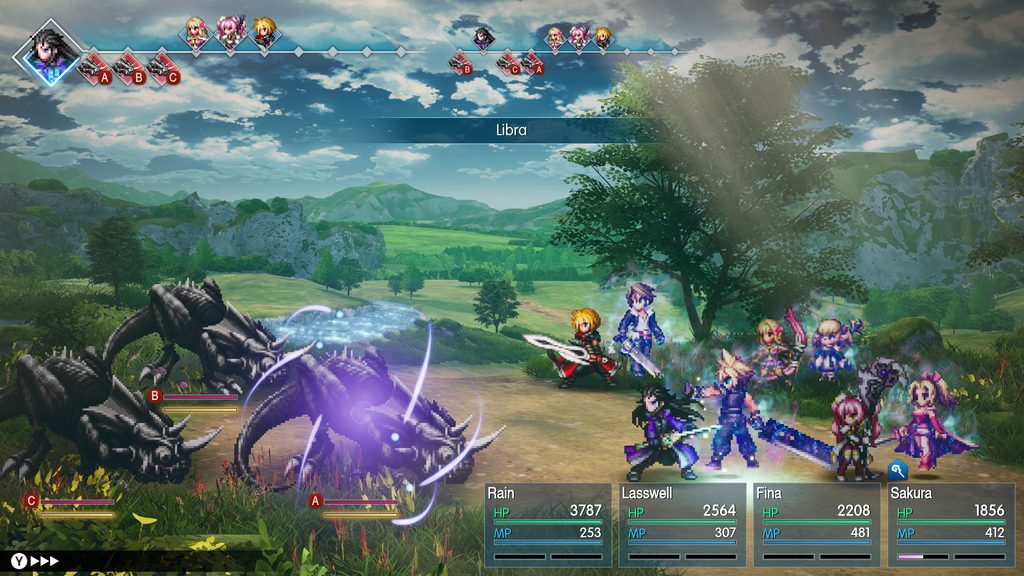
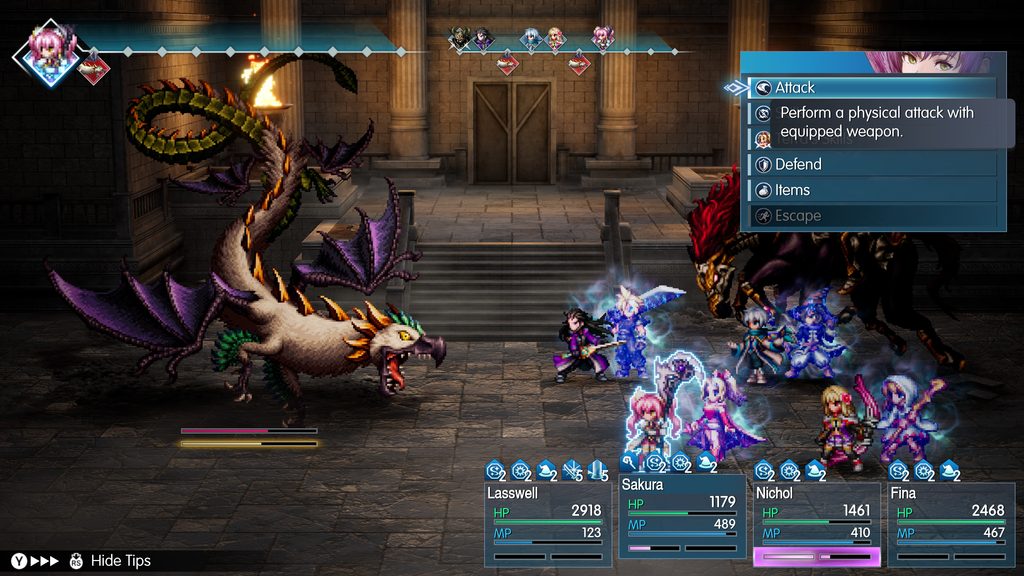
The combat appears almost painfully simple until you actually look under the hood. Battles are traditional turn-based affairs—there’s no ATB system here. Structurally, it’s much closer to the early games. Elemental weaknesses matter a great deal, and the stagger mechanic is central to dealing damage efficiently. Bosses generally ask you to identify their weaknesses, exploit them, stagger the boss, and then burst it down during the opening. At first glance, that sounds like something that would become repetitive over 30-plus hours, and I definitely thought that was where I would land with it.
But I didn’t. That’s because while the underlying tactical question stays relatively straightforward, what constantly changes is how you choose to answer it. The Vision system gives you a ridiculous amount of room to manipulate party roles and combat flow. As you progress and master the different Visions you find, the number of questions you need to ask yourself when building your party increases alongside them. It becomes less about simply making sure you have the right elemental coverage and more about figuring out how to combine passives, buffs, elemental attacks, and character abilities into some truly busted builds.
The way Visions work is pretty simple. You find shrines throughout the world, learn a little about a character from Final Fantasy’s history, and then unlock that Vision for your party. As you fight with a Vision equipped, that character gains mastery, unlocking passive bonuses and skills that can still be equipped even after you swap to something else. Maxing out a Vision lets you equip its Spirit in an ability slot, giving you access to its full suite of mastery abilities at a steep discount. That interplay between different Vision passives and active abilities becomes the core of the game’s buildcraft.
For example, I gave Lasswell an ability from Firion that let him take two actions per turn. That meant I could immediately activate both of his self-buffs and turn him into an absolute stagger and critical-strike monster.
I gave Nichol the same double-action ability, which let him activate two party-wide damage and stagger buffs in a single turn. Combine that with his Limit Break, which doubles everyone’s actions, and Sakura’s Doublecast ability from Shantotto, and after a couple of setup turns I could output absolutely ridiculous amounts of damage. By the time I had the required Visions mastered, I was basically trivializing the late game.
That also changed how I thought about party composition. I eventually decided I didn’t even need Rain to function as a dedicated tank because I was killing things so quickly, so I swapped Fina in for massive healing support instead. But I also could have built Rain as more of a bruiser, or brought in one of the other characters for a completely different damage profile.
That is exactly what good RPG buildcraft should be doing. It made me ask questions about my party composition and how I was building each character instead of just grabbing whoever had the biggest numbers. The same thing applies to the Visions themselves. You have to decide which ones to equip for their active abilities, which ones are worth leveling for specific mastery bonuses, and which components from each Vision complement what you actually want a character to do. You’re rarely just picking the “best” Vision and forgetting about it.
The main reason Resonance avoids combat fatigue is because progression isn’t just a numerical stat increase. The game continually expands the number of interactions available to the player, and therefore the number of questions the player has to answer. The weakness-and-stagger system simply provides a readable foundation that is easy to understand but much harder to fully optimize. A lot of stagger-based combat systems eventually devolve into number chasing and become mindless. Resonance largely avoids that because figuring out how to optimize the process remains enjoyable all the way through the endgame.
VISIONS ARE FAN SERVICE — BUT THEY ARE GOOD FAN SERVICE
The Visions are obvious fan service. They’re loaded with Final Fantasy history, with most of them representing heroes from prior games in the series. Everyone is here, from Clive all the way back to the Warrior of Light. Even Y’shtola from XIV makes an appearance. There are familiar characters, abilities, and references to the series’ history everywhere in this game, and it would be very easy to dismiss all of that as nostalgia bait.
But I think that’s being a little harsh. The fan service isn’t there merely to trigger your ’member berries. It’s deeply integrated into the actual RPG systems, and I think it’s incredibly cool how Final Fantasy’s history effectively becomes your buildcraft language.
Bad fan service would be: “Cloud appears, does nothing, and everyone claps like it’s a Liberty Bibbity commercial.” That would just be pointless nostalgia baiting. It wouldn’t add anything to the game and, if anything, would cheapen the reference.
Resonance doesn’t do that. When you find Cloud, he changes which abilities you have access to. Firion changes how you can set up your masteries. The Warrior of Light can change how your party functions. These characters aren’t just references—they create actual mechanical questions for you to answer.
That gives the fan service utility. It’s additive rather than purely decorative. Resonance celebrates Final Fantasy by making the franchise’s history playable instead of reducing it to a cheap reference. That’s what makes it feel like a game genuinely built from the IP’s legacy rather than another cash grab exploiting it.
THE STORY IS GOOD EVEN IF THE CHARACTERS AREN’T ALL-TIMERS
I also genuinely enjoyed this story. There were plenty of emotional moments that landed for me, a few big twists that worked, some classic Final Fantasy whimsy, and it kept me invested all the way through the ending. That being said, a good story does not automatically mean a great cast of characters.
A lot of the cast fits recognizable archetypes you’ve seen a million times before, and none of them ever get anywhere close to the level of the more memorable characters from the numbered entries. Some members mattered more to me than others, but their individual identities were fairly weak, and the ensemble works much better than the characters do in isolation. That doesn’t ruin the story, though, because everyone still functions effectively inside the plot. The relationships they build with one another work, the emotional beats land, and I never once thought, “these characters suck.”
The problem isn’t one of believability but more of memorability. I enjoyed spending time with this cast, but I don’t think I’ll be thinking about most of them years from now the way I still think about some of the more notable characters from the mainline series.
The final villain is probably the clearest weakness in the entire narrative. The ultimate big bad is extraordinarily bland, has poorly developed motivations, and basically zero thematic depth. The final conflict still worked for me because I cared about the journey, enjoyed the spectacle, and had enough emotional investment in the story and characters to carry me through it. But the villain himself creates no particularly interesting ideological or thematic conflict.
That’s ultimately the best way I can describe the writing in Resonance: There is far more emotional weight here than thematic weight. The story works in the moment, but it’s probably not going to leave you stunned and thinking about its ideas for days afterward.
CHAPTER 5 IS WHERE THE GAME ALMOST GETS IN ITS OWN WAY
The pacing also gets a little uneven around the midpoint. The first four chapters move at a pretty fast clip. Progression is relatively linear, and the side content that does exist mostly consists of simple fetch quests that never overwhelm the main story. It felt like I was naturally moving between narrative, combat, progression, and light exploration without any one element getting in the way of another.
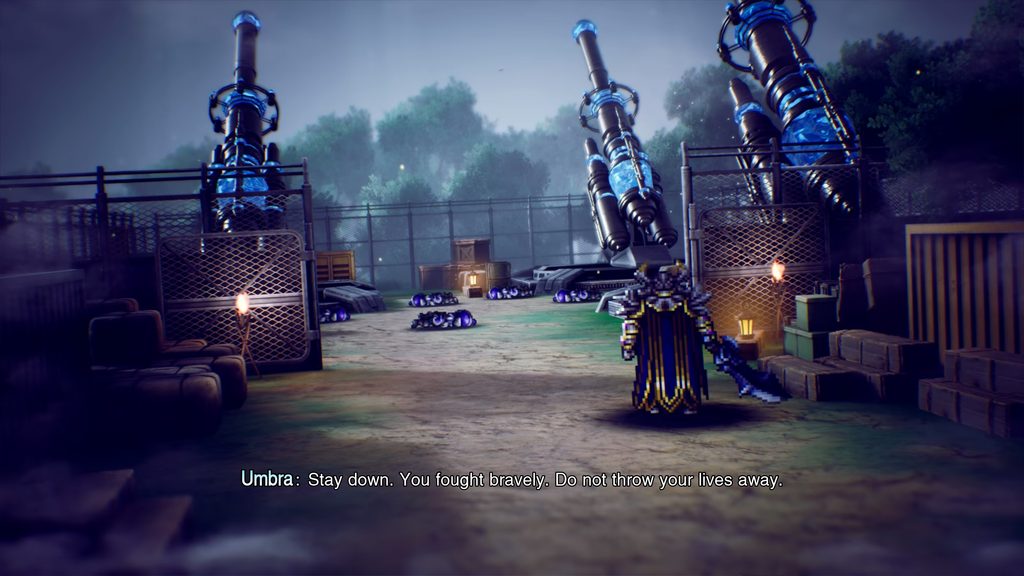
That pace comes to a screeching halt in Chapter 5. This is when you get the airship and the world suddenly opens up in a massive way. Sidequest volume jumps through the roof, more optional areas and progression systems become available, and the game essentially hands you the keys to everything all at once.
Initially, the sudden increase in the level curve had me doing a little grinding, and that—combined with sidequests scattered all over the world—slowed the story down dramatically. For a while, I was genuinely worried the game had hit a wall and would only decline from there. I’m also exactly the type of player this structure punishes. If I see available sidequests, I want to clear them. And the problem is that most of this optional content opens up right when the narrative itself is really starting to pick up steam.
Getting the airship and immediately being encouraged to go explore the world turned what had been a tightly paced RPG into several hours of detours. The sidequests themselves aren’t necessarily terrible. Most of them are pretty basic, but the world also isn’t remotely painful to explore. The problem is simply when the game decides to dump all of this freedom on you. It happens at exactly the point where I wanted that freedom the least.
Thankfully, the pacing recovers from Chapters 6 through 8. Chapter 5 ultimately exists as a noticeable low point rather than the beginning of some larger structural failure that causes the game to fall apart. And by the end, I also realized the grinding concern didn’t really hold up. You don’t actually need to grind much at all to keep pace with the game. The real issue in Chapter 5 isn’t progression—it’s that the sudden explosion of optional content temporarily gets in the way of a story that had otherwise been moving at a very comfortable pace.
IT DOESN’T FEEL LIKE A CONVERTED MOBILE GAME
I knew going in that Resonance originated from the mobile game Brave Exvius, so I already had a natural suspicion that this would be some kind of cash grab filled with simplified systems, obvious gacha mechanics, weird progression, repetitive content, compromised presentation, and all of the other baggage you tend to associate with mobile games. On top of those reservations, I also really didn’t enjoy Octopath Traveler 0 precisely because of how obvious its repurposed mobile-game structure felt.
But the truth about Resonance is that if nobody had told me this was a converted mobile game, I honestly don’t think I would have known. Nothing meaningful about the experience ever made me stop and think: “Oh yeah. This was designed around mobile gaming.”
The conversion feels much less like game preservation and much more like game reconstruction. Resonance stands comfortably alongside purpose-built console and PC RPGs without constantly reminding you where it came from.
Some of the sidequest structure is admittedly pretty basic, and I’ve already talked about the archetypal character writing. But neither of those problems immediately reads as mobile-game baggage. I can identify them that way only because I already knew about Resonance’s origins going into it. And truth be told, plenty of full-price JRPGs designed specifically for consoles and PC suffer from those exact same problems.
So while the mobile DNA is technically still there, I never felt like I was playing a mobile game that had been stretched into something larger. I just felt like I was playing a Final Fantasy RPG.
THE 2.5D STYLE IS PERFECT FOR WHAT RESONANCE IS TRYING TO DO
The 2.5D art style is also absolutely perfect for this game, and this is probably the strongest implementation of the style I’ve seen since the Star Ocean 2 remake. Resonance looks gorgeous. The sprite work is excellent, the environments are richly detailed, and the modernized lighting and effects make it feel like a classic RPG brought forward in all the right ways rather than something trying to imitate the past. It fits the traditional Final Fantasy model unusually well.
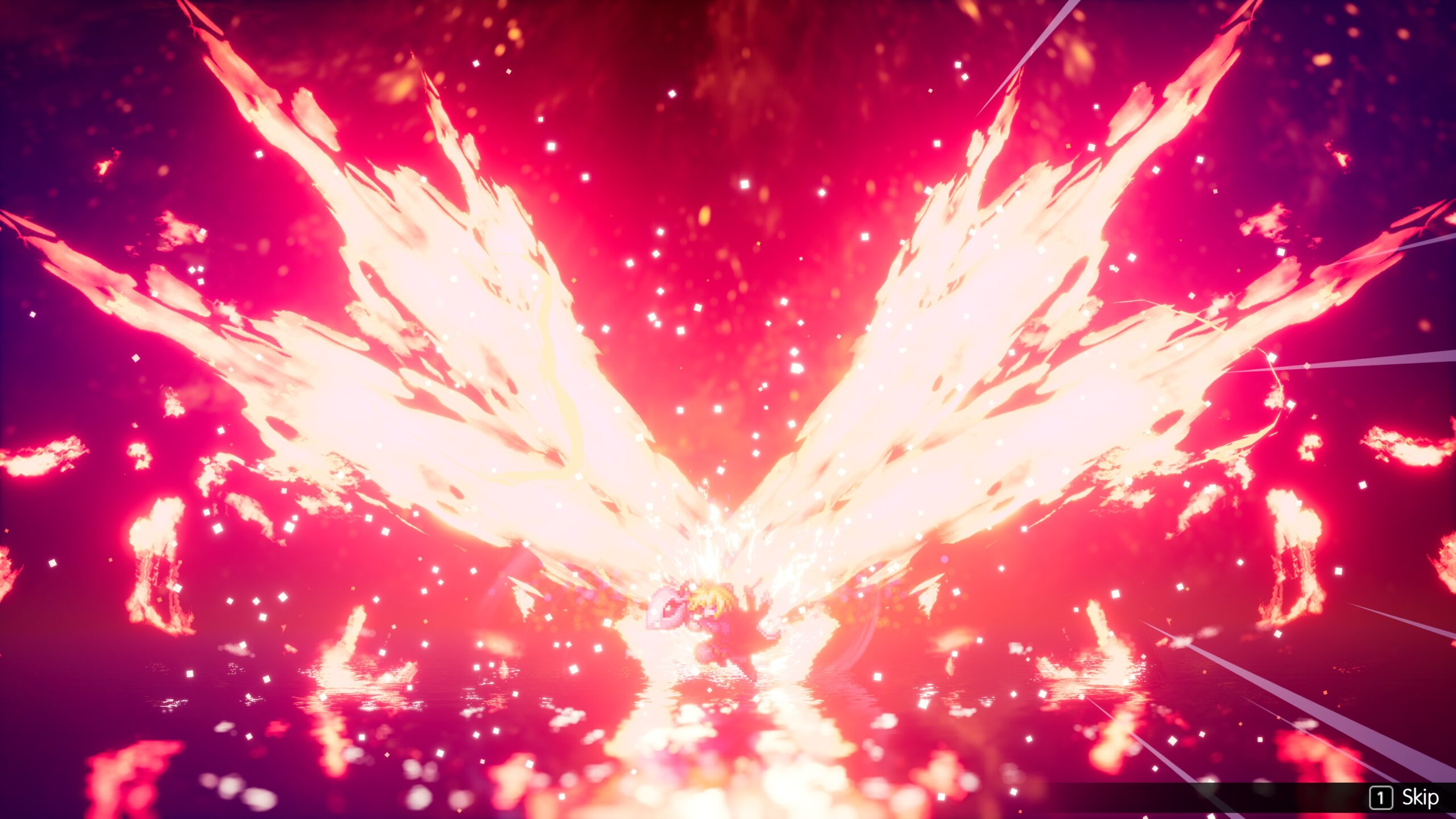
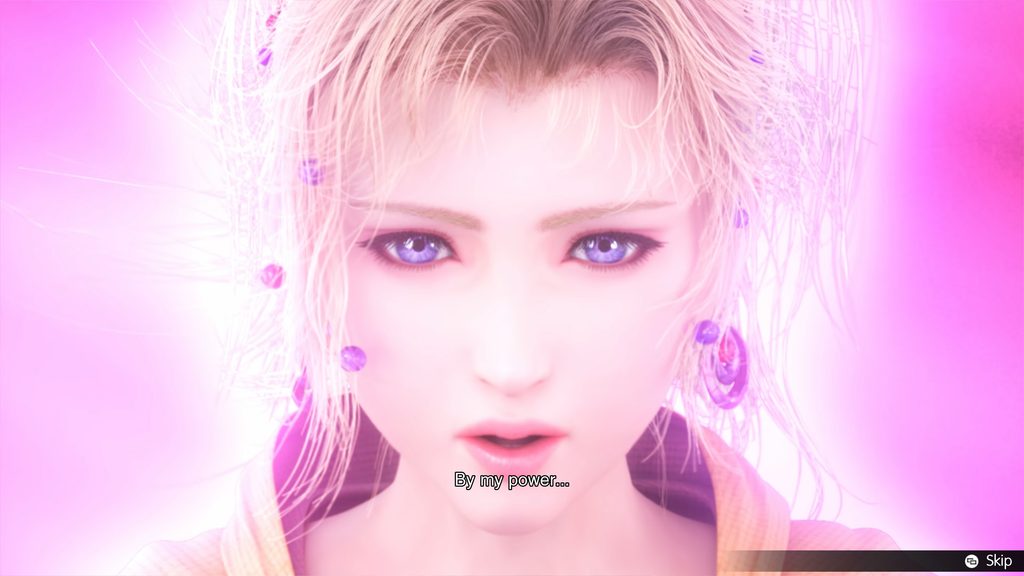
Honestly, the biggest visual flaw is the weird Unreal Engine 5 renders of the various Visions whenever you use their Resonance attacks. They’re not necessarily bad on their own, but they clash hard with the rest of the presentation. Going from these beautiful pixel-art characters and environments into a realistic 3D render is jarring, and I don’t think those sequences needed to exist at all.
Outside of that strange art-direction choice, the presentation reinforces the game’s entire identity. Resonance understands that old design language does not need to be replaced in order to feel modern. It can simply be refined, polished, and presented with contemporary technology. And that’s one of the things I found so refreshing about the game. It feels like a traditional JRPG that isn’t embarrassed to be a traditional JRPG.
RESONANCE UNDERSTANDS WHAT FINAL FANTASY ACTUALLY IS
Resonance is more than just a good traditional JRPG, though, because it gets to a deeper question about Final Fantasy: What actually makes a Final Fantasy game feel like Final Fantasy? Obviously, it isn’t just one specific combat system to the exclusion of everything else. This series has always experimented. But for decades, there was still a recognizable throughline in its design language.
Resonance brings together party-based turn-based combat, elemental weaknesses, character specialization, a job-like progression system, summons, airships, overworld exploration, towns, melodrama, dramatic villains, crystals, recurring monsters, familiar spells, and decades of franchise iconography.
And none of these things ever feel quaint. They don’t feel like something the games industry has “moved past” or “grown out of.” My enjoyment of Resonance didn’t come from tolerating what some people call “antiquated mechanics,” and it wasn’t just rank nostalgia. I enjoyed these mechanics because they’re still good. They were always good. They are timeless.
Final Fantasy has increasingly moved toward action combat, cinematic spectacle, and radically different structures from entry to entry. And I have even enjoyed some of those games on their own merits. But as Final Fantasy games? No. I don’t like the implication something like Final Fantasy XVI makes—that traditional Final Fantasy needed to be replaced rather than iterated upon.
Resonance proves that you can modernize within the classic formula instead. The Vision system is the perfect example. It layers modern buildcraft complexity on top of a traditional turn-based foundation without requiring the game to throw that foundation away. That was always an option.
Final Fantasy never needed to abandon its roots in order to evolve. And I think the series has been worse for acting like it did.
IT DOESN’T NEED TO BE GROUNDBREAKING
Resonance may not be a revolutionary game. A lot of it is very familiar—from the character archetypes, to the story, to the overall structure. Even its art style has become something of a modern Square Enix tradition at this point. But originality is not the same thing as quality.
A game can refine something that already works instead of constantly reinventing it, and there’s absolutely nothing wrong with that. Sometimes a franchise benefits more from continuity than from trying to transform itself with every new entry. Final Fantasy has spent so much time chasing reinvention that simply refining the formula we already know works almost feels novel now. And that’s what Resonance does so well.
It takes familiar ingredients and executes them at a very high level. Its few weaknesses never became severe enough to dominate my experience, and when the credits rolled, my main takeaway wasn’t that I had played something revolutionary. It was: “That was a damn good Final Fantasy adventure.” And honestly, I think there’s more value in that than some people realize.
WHAT RESONANCE PROVES
In many ways, Resonance proves that the classic formula not only still works, but that this is Final Fantasy at its absolute best. I’m not arguing that the series needs to completely abandon action-oriented design, stop experimenting, or make every future numbered entry copy Resonance. What I am arguing is that we should have more games like this existing alongside those other interpretations of the franchise.
There is no good reason this style of Final Fantasy should have disappeared in the first place, and judging by the overwhelmingly positive response on Steam, Square should have ample proof now that players still respond to it. I don’t want to see Resonance treated like a novelty or some one-off nostalgia experiment. I want Square to keep making Final Fantasy games like this.
Let the traditional games and the experimental ones coexist. Let one branch of the series push into action combat, cinematic spectacle, or whatever else Square wants to try, while another continues refining the turn-based, party-driven RPG formula that defined Final Fantasy for decades. Those approaches do not have to compete with one another. Because evolution does not have to mean abandoning the previous form entirely. Final Fantasy can move forward without leaving Final Fantasy behind.
VERDICT
Final Fantasy Resonance is not a flawless game, but very few of its flaws meaningfully undermined my experience. The Vision system is excellent, the buildcraft stays engaging all the way through the endgame, the bosses are consistently fun, and the combat never really fell into the repetitive stagger-and-burst routine I expected it to. The story has some genuinely strong emotional moments, the final chapters landed for me, and the 2.5D presentation is absolutely gorgeous.
Even the fan service works because it is mechanically integrated into the actual RPG systems rather than existing purely so you can point at Cloud and clap. And perhaps most impressively, I never really felt the game’s mobile origins. If you had handed me Resonance without telling me where it came from, I would have assumed this was a purpose-built console and PC RPG from the beginning.
The weaknesses are there. The cast has relatively weak individual identities, the final villain is bland and poorly motivated, and the story has significantly more emotional weight than thematic depth. Chapter 5 also creates a noticeable pacing valley if you engage heavily with the sudden explosion of side content.
But none of those problems are what I was thinking about when the credits rolled. I was thinking about how much fun I had. I was thinking about how good traditional turn-based Final Fantasy still feels. And I was thinking about how frustrating it is that this style of game has largely disappeared from the series when Resonance demonstrates so clearly that there was never anything wrong with it in the first place.
Final Fantasy Resonance does not prove that Final Fantasy should stop evolving. It proves that evolution never required abandoning what Final Fantasy already did best. Resonance is not the future of Final Fantasy. But after finishing it, I am convinced this style of Final Fantasy deserves to have a future.
9/10
Reviewed by VG Frogman
Platform: PC
Reviewed: 10/29/2026